


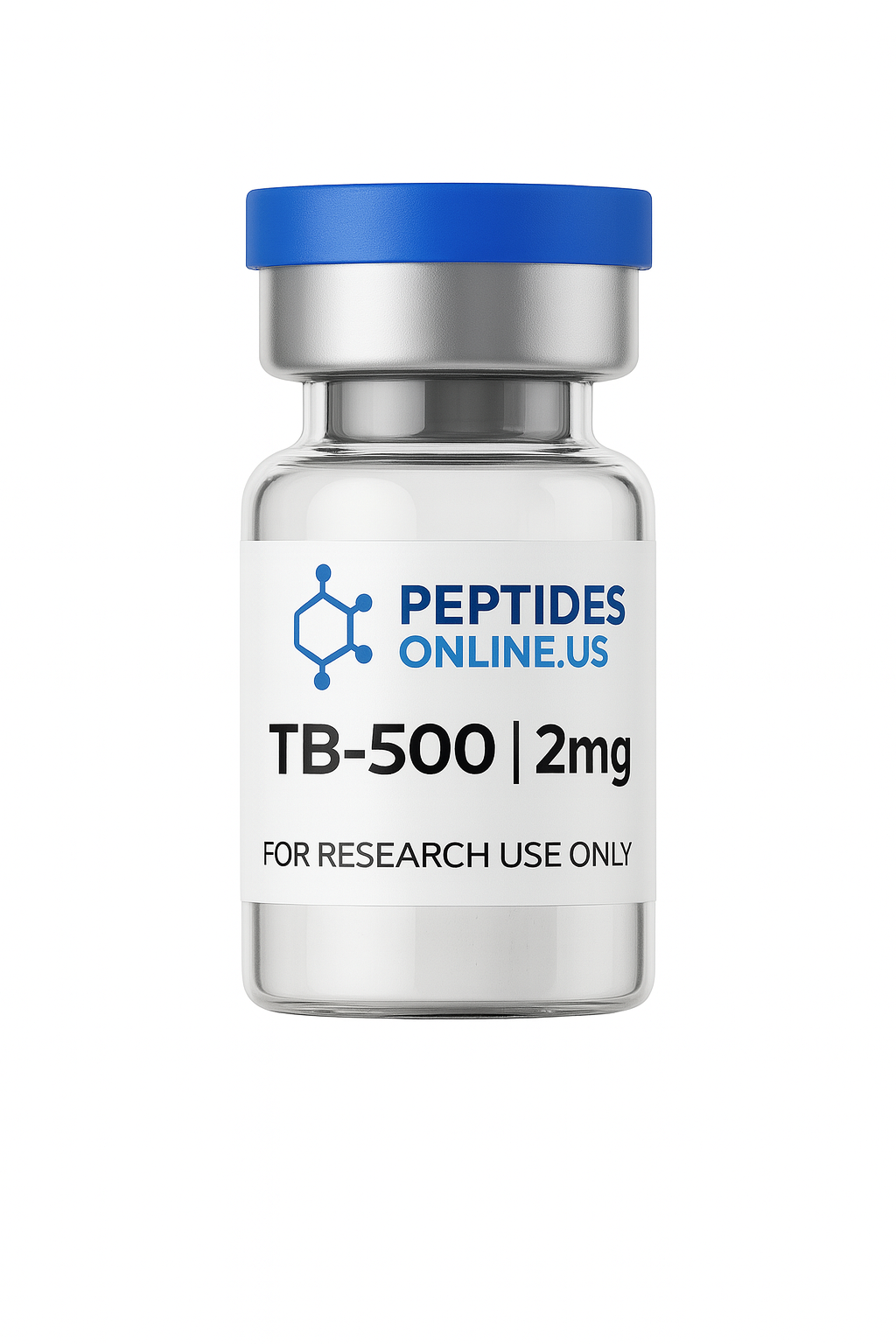
TB-500 Peptide (Thymosin β4 research peptide) 2mg
TB-500 is a synthetic peptide modeled after thymosin beta-4, a natural protein from the thymus gland that supports cellular repair and regeneration. Researchers study it for its ability to promote tissue growth and stimulate the formation of new blood vessels. TB-500’s link to actin regulation makes it valuable for understanding how cells move and organize during recovery.
Studies show that this peptide helps improve structural rebuilding in muscles and connective tissues. Its stable composition allows scientists to reproduce consistent results in laboratory experiments. TB-500 continues to play an important role in peptide research focused on cellular repair, inflammation control, and regenerative processes that support faster and more efficient tissue restoration.
What Is TB-500?
What is TB-500? It is a synthetic version of a peptide developed from a short segment of thymosin beta-4, a natural protein found in many animal tissues. Scientists first identified its structure while studying cell repair and regeneration mechanisms. The goal was to create a stable, reproducible compound that could mimic thymosin beta-4’s biological activity in research.
Today, TB-500 is used to study processes such as wound healing, tissue growth, and muscle repair. Ongoing studies explore how this peptide influences actin regulation, cellular movement, and recovery pathways that help researchers understand complex biological systems related to regeneration and recovery.
Relation Between TB-500 and Thymosin Beta-4 (Tβ4)
TB-500 peptide was designed to replicate a specific active region of thymosin beta-4, the natural protein linked to cellular repair and movement throughout the human body. Both share similar amino acid sequences, but TB-500 offers greater stability and purity, making it ideal for laboratory research. These design choices support shelf life and batch-to-batch consistency in research use.
Studies comparing thymosin beta-4 and TB-500 show that both influence actin regulation and cell migration. [1] TB-500 is often chosen for experiments because it provides reliable results and predictable behavior. Its structure allows researchers to study tissue regeneration, wound healing, and inflammation control with improved reproducibility.
How TB-500 Works in Research Settings
TB-500 peptides are studied for their influence on cell migration, tissue repair, and regeneration. Research shows that TB-500 interacts with actin, a protein associated with cellular structure and movement. This function supports faster cell growth and better structural recovery in damaged tissues during experiments.
Scientists also examine TB-500’s connection to angiogenesis, the process that forms new blood vessels. [2] The peptide’s stable molecular design improves its bioavailability and reliability in research. Findings suggest that TB-500 helps reduce inflammation and supports cellular rebuilding, making it a valuable tool for studying biological repair and regeneration across different tissue types.
Molecular Structure and Function
TB-500 features a carefully engineered molecular structure that mirrors a specific region of thymosin beta-4. This design enhances peptide stability and purity, allowing researchers to achieve consistent and repeatable results in laboratory testing. Its structure supports cellular studies involving migration, repair, and regeneration by maintaining predictable behavior during experimental use.
The following identifiers refer to thymosin beta-4, the natural protein that TB-500 is modeled after for research comparators:
-
Peptide Sequence: Ac-Ser-Asp-Lys-Pro-Asp-Met-Ala-Glu-Ile-Glu-Lys-Phe-Asp-Lys-Ser-Lys-Leu-Lys-Lys-Thr-Glu-Thr-Gln-Glu-Lys-Asn-Pro-Leu-Pro-Ser-Lys-Glu-Thr-Ile-Glu-Gln-Glu-Lys-Gln-Ala-Gly-Glu-Ser-OH
-
Molecular Formula: C₂₁₂H₃₅₀N₅₆O₇₈S
-
Molecular Weight: 4963.49 g/mol
-
CAS Number: 77591-33-4
-
PubChem CID: 16132341
-
Synonyms: Thymosin Beta-4 Fragment; Synthetic TB-500 Peptide
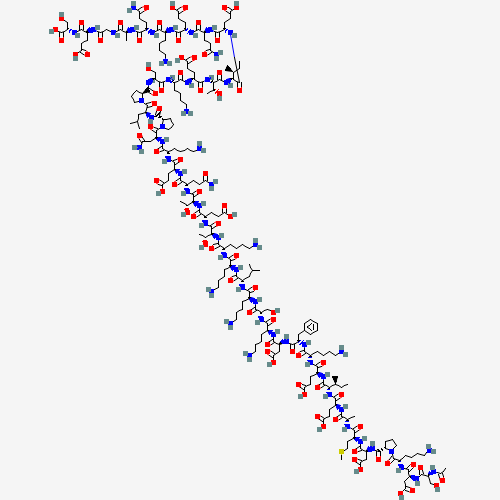
Synthetic Derivative of Natural Thymosin Beta-4
TB-500 was developed as a synthetic fragment of thymosin beta-4, replicating the amino acid sequence within its actin-binding domain responsible for actin interaction and cell migration. [3] Scientists created it to achieve higher purity and stability than the natural full-length protein. These characteristics make it an important compound in peptide therapy research and a valuable model for regenerative medicine investigations.
Through solid-phase peptide synthesis, TB-500 maintains structural accuracy and resistance to degradation. Its synthetic design ensures uniform molecular composition across research batches. These qualities make TB-500 a preferred option for studies focused on peptide kinetics, bioactivity, and tissue restoration under laboratory conditions requiring precision and reproducibility.
Mechanism of Action and Cellular Effects
TB-500 interacts with actin-binding proteins that regulate the cell’s internal framework. This interaction supports proper cell shape, movement, and organization during repair processes. By promoting actin polymerization, TB-500 helps cells migrate efficiently to damaged areas and contributes to faster structural rebuilding.
Research shows that TB-500 can influence pathways related to angiogenesis, gene expression, and inflammation control. Scientists often study its effects on signaling molecules like TGF-β and VEGF, which play roles in tissue remodeling. These combined actions make TB-500 a valuable tool for studying how cells coordinate regeneration, structural integrity, and recovery at the molecular level.
TB-500 Research Applications
TB-500 is widely studied for its diverse applications in cellular and regenerative biology. Researchers investigate its effects on nerve function, tissue growth, and vascular development. It is also examined for its influence on hair follicle regeneration, antibiotic synergy, and muscle recovery.
Studies continue to explore TB-500’s potential across multiple systems, including cardiovascular, neurological, and musculoskeletal models. Its consistent performance and structural stability make it a key compound in ongoing research focused on cellular repair and regeneration.
Role in Nerve and Neurological Function Studies
TB-500 is being studied for its potential to support nerve growth and structural repair. Researchers are interested in its ability to influence axonal regeneration and restore neural connections after injury. Its interaction with actin-binding proteins may help guide cell movement, making it valuable for studying nerve rebuilding processes.
Scientists conduct laboratory experiments using neural cell cultures and animal models to evaluate TB-500’s effects on neuron survival and signaling. [4] Research suggests improved axonal extension, reduced inflammation, and enhanced communication between nerve cells. These results suggest TB-500 plays a meaningful role in understanding neuroregeneration and cellular recovery.
Research on Cell Proliferation, Blood Vessel, and Tissue Growth
TB-500 is also being studied for its role in stimulating cell growth and the formation of new blood vessels. Researchers aim to understand how it promotes tissue development and accelerates structural rebuilding after cellular damage and post-surgical healing processes. Its influence on actin organization helps regulate how cells move and multiply during repair.
Laboratory and ex vivo studies use cultured cells and animal models to observe TB-500’s effects on endothelial activity and collagen formation. Results show improved cell proliferation, faster tissue formation, and enhanced vascular development. [5] These findings suggest TB-500 may play a key role in studying tissue regeneration and structural recovery.
Investigations Into Hair Follicle and Skin Regeneration
Researchers study TB-500 to better understand its effects on hair follicle activation, hair growth, and skin tissue renewal. It attracts interest because of its ability to influence keratinocyte and fibroblast behavior—two cell types vital to skin health. [6] These cells help drive collagen production and wound closure.
Experiments often use cultured skin cells and controlled animal models to test TB-500’s effect on tissue remodeling. Findings show faster epithelial recovery, improved blood vessel growth, and stronger structural organization in regenerating skin. Current evidence supports TB-500’s importance in research exploring cellular repair and the biological processes behind hair and skin regeneration.
TB-500 and Synergistic Effects with Antibiotics
Scientists are studying TB-500 to understand how it interacts with antibiotics during tissue recovery research. The goal is to see whether combining both can improve wound closure and reduce infection risk. TB-500’s influence on cell migration and blood vessel formation makes it a useful compound for exploring this synergy. [7]
Researchers conduct experiments that measure bacterial reduction, inflammation response, and tissue growth. Results indicate enhanced healing and stronger cellular defense when TB-500 is paired with antimicrobial agents. These findings suggest a potential cooperative relationship that supports further study into combined peptide and antibiotic applications.
Studies on Cardiovascular and Muscle Health
Other areas where TB-500 is currently being explored include its potential roles in cardiovascular function, muscle recovery, and performance enhancement. Researchers focus on its ability to promote angiogenesis and improve blood vessel strength. These effects may help explain how tissues adapt to physical stress and maintain proper circulation during repair.
Laboratory studies analyze TB-500’s interaction with actin and myosin, two proteins that control muscle contraction and elasticity. [8] Results show improved muscle fiber organization and enhanced oxygen delivery in experimental models.
This research helps scientists and healthcare providers understand TB-500’s potential role in supporting vascular integrity, cellular regeneration, and overall muscle performance. These areas are often explored alongside physical therapy and rehabilitation studies under controlled conditions.
TB-500 in Injury Recovery Research
TB-500 is also being studied for its role in supporting faster recovery after tissue injury. Researchers are interested in how it influences cell movement, actin polymerization, and wound closure. These actions help explain its importance in studying tissue repair mechanisms.
Experiments in animal models often involve tendon, ligament, and muscle injuries to assess recovery rate and cellular organization. [9] Findings show increased angiogenesis, reduced inflammation, and improved tissue remodeling where TB-500 is applied. Its stability and reproducibility make it a dependable compound for studying how cells coordinate repair and rebuild structure following physical damage or mechanical stress in laboratory environments.
In athletic settings, organizations such as the World Anti-Doping Agency (WADA) list thymosin beta-4 and its derivatives, including TB-500, as prohibited substances because of their potential performance-enhancing effects and association with tissue repair research. [10] Drug test anal procedures, along with equine urine analysis, are among the detection tools used to identify these compounds in competitive environments.
TB-500 in Neuroprotective and Degenerative Disease Research
Researchers study TB-500 to understand its potential neuroprotective effects in models of degenerative disease. Its actin-regulating properties may help stabilize neurons and reduce cellular damage caused by oxidative stress. [11] Scientists are examining how it influences pathways that protect nerve cells and maintain structural integrity.
Laboratory tests measure TB-500’s impact on neuron survival, glial cell activity, and systemic inflammation control. Early results show reduced cell death and improved synaptic stability in treated models. These findings support continued exploration of TB-500 as a research tool for studying neurodegeneration, cellular defense mechanisms, and nervous system resilience.
Broad Range of Regenerative and Cellular Applications
Researchers are also studying how TB-500 supports wound repair, blood vessel and muscle growth, and recovery from muscle strains in various tissue types. These effects make it a valuable compound for examining structural recovery at the molecular level.
Studies measure TB-500’s interaction with signaling molecules and growth factors that regulate inflammation and regeneration. Results show improved tissue formation, faster recovery, and balanced cellular communication. Its versatility allows scientists to apply it in studies involving muscle, nerve, epithelial, and connective tissue regeneration.
Laboratory Testing and Quality Verification
TB-500 from Peptides Online undergoes strict laboratory testing to confirm its purity, identity, and consistency. Each batch is analyzed using validated methods that verify molecular accuracy and composition. These quality checks help maintain reliable results in research applications.
A Certificate of Analysis (COA) accompanies every product, confirming its compliance with testing standards. This process ensures that laboratories receive a verified peptide with proven structure, purity, and stability suitable for advanced experimental use.
Purity and Identity Testing
TB-500 undergoes multiple analytical tests to confirm purity and molecular identity. High-performance liquid chromatography (HPLC) separates the peptide from potential impurities, while mass spectrometry (MS) verifies its molecular weight and structure. These methods confirm that each batch meets strict laboratory standards.
Additional verification includes amino acid sequencing and peptide mapping to ensure full structural accuracy. Peptides Online maintains purity levels of 99% or higher for dependable research outcomes. Independent laboratories or in-house quality teams review every test, ensuring TB-500 remains consistent, stable, and aligned with its established molecular profile.
Certificate of Analysis (COA)
A Certificate of Analysis (COA) provides documented proof of TB-500’s purity, composition, and molecular integrity. Each certificate includes verified data such as peptide sequence confirmation, molecular weight, and analytical methods used during testing. These details ensure that researchers receive an accurate and fully authenticated product.
Every COA is batch-specific, meaning it reflects results from the exact production lot supplied. Qualified laboratory technicians or third-party facilities validate each report. This process guarantees traceability, transparency, and research reliability, giving scientists confidence in TB-500’s consistency, quality, and compliance with established laboratory testing standards.
Product Handling and Storage
Proper handling and storage are essential to maintain TB-500’s quality and stability. When exposed to heat or moisture, the peptide can lose structural integrity, affecting research accuracy. Peptides Online follows strict handling procedures, from production to packaging, to protect every vial.
Each product is stored in temperature-controlled environments and sealed to prevent contamination. Researchers who buy TB-500 receive a product maintained under optimal conditions, ensuring consistency, purity, and dependable performance during laboratory testing.
Storage Guidelines for Lyophilized TB-500
Lyophilized TB-500 should be stored in a cool, dry environment to maintain peptide stability. The ideal temperature range is between 2°C and 8°C for short-term storage and below -20°C for long-term preservation. Light, humidity, and temperature changes can cause degradation or reduced potency.
The vial should remain sealed until reconstitution to prevent moisture exposure. Researchers are advised to handle it in a clean environment and avoid repeated thawing. Following these guidelines preserves TB-500’s molecular structure, ensuring consistent results and reliable performance in laboratory studies and experimental applications.
Reconstitution and Stability Information
TB-500 should be reconstituted using sterile diluents such as bacteriostatic water. The solvent is added slowly to the vial, allowing the powder to dissolve without agitation. Gentle mixing helps maintain peptide integrity and prevents foaming or denaturation.
Once reconstituted, the solution should be clear and stored in a refrigerator between 2°C and 8°C. It typically remains stable for up to four weeks. Researchers often divide the solution into smaller aliquots to avoid contamination. Proper labeling, storage, and handling preserve TB-500’s structure and ensure reliable, repeatable results in controlled laboratory experiments.
Disclaimer
TB-500 is intended strictly for laboratory research purposes. It is not approved for human, veterinary, or diagnostic use. This compound should be handled only by qualified professionals working in controlled research environments. All personnel must follow established safety and compliance protocols during handling and storage. The information provided here is for educational and scientific reference only. It should not be interpreted as medical, therapeutic, or legal advice. Researchers are responsible for ensuring that all experimental use of TB-500 complies with applicable regulatory and institutional standards.
References and Supporting Studies
-
Goldstein, A. L., Hannappel, E., Sosne, G., & Kleinman, H. K. (2012). Thymosin β4: a multi-functional regenerative peptide. Basic properties and clinical applications. Expert Opinion on Biological Therapy, 12(1), 37–51. PubMed
-
Philp, D., Huff, T., Gho, Y. S., Hannappel, E., & Kleinman, H. K. (2003). The actin binding site on thymosin β4 promotes angiogenesis. FASEB Journal, 17(14), 2103–2105. PubMed
-
Esposito, S., Deventer, K., Goeman, J., Van der Eycken, J., & Van Eenoo, P. (2012). Synthesis and characterization of the N-terminal acetylated 17-23 fragment of thymosin β4 identified in TB-500, a product suspected to possess doping potential. Drug Testing and Analysis, 4(9), 733–738. PubMed
-
Yang, H., Cheng, X., Yao, Q., Li, J., & Ju, G. (2008). The promotive effects of thymosin β4 on neuronal survival and neurite outgrowth by up-regulating L1 expression. Neurochemical Research, 33(11), 2269–2280. PubMed
-
Su, L., Kong, X., Loo, S., Gao, Y., Liu, B., Su, X., Dalan, R., Ma, J., & Ye, L. (2022). Thymosin β4 improves endothelial function and reparative potency of diabetic endothelial cells differentiated from patient induced pluripotent stem cells. Stem Cell Research & Therapy, 13 (1), 13. PMC
-
Philp, D., Nguyen, M., Scheremeta, B., St-Surin, S., Villa, A. M., Orgel, A., & Kleinman, H. K. (2004). Thymosin β4 increases hair growth by activation of hair follicle stem cells. The FASEB Journal, 18(2), 385–387. PubMed
-
Carion, T. W., Ebrahim, A. S., Alluri, S., Ebrahim, T., Parker, T., Burns, J., Sosne, G., & Berger, E. (2020). Antimicrobial effects of thymosin β4 and ciprofloxacin adjunctive therapy in Pseudomonas aeruginosa induced keratitis. International Journal of Molecular Sciences, 21(18), 6840. MDPI
-
Maar, K., Thatcher, J. E., Karpov, E., Rendeki, S., Gallyas, F. Jr., & Bock-Marquette, I. (2025). Thymosin β4 modulates cardiac remodeling by regulating ROCK1 expression in adult mammals. International Journal of Molecular Sciences, 26(9), 4131. MDPI
-
Xu, B., Yang, M., Li, Z., Zhang, Y., Jiang, Z., Guan, S., & Jiang, D. (2013). Thymosin β4 enhances the healing of medial collateral ligament injury in rat. Regulatory Peptides, 184, 1–5. PubMed PMID: 23523891. PubMed
-
Van Eenoo, P. (2013). Investigation of in vitro/ex vivo TB-500 metabolism, synthesis of relevant metabolites and detection limits in urine and plasma. WADA
-
Xiong, Y., Mahmood, A., Meng, Y., Zhang, Y., Zhang, Z. G., Morris, D. C., Chopp, M. (2012). Neuroprotective and neurorestorative effects of thymosin β4 treatment following experimental traumatic brain injury. Annals of the New York Academy of Sciences, 1270, 51–58. PMC