


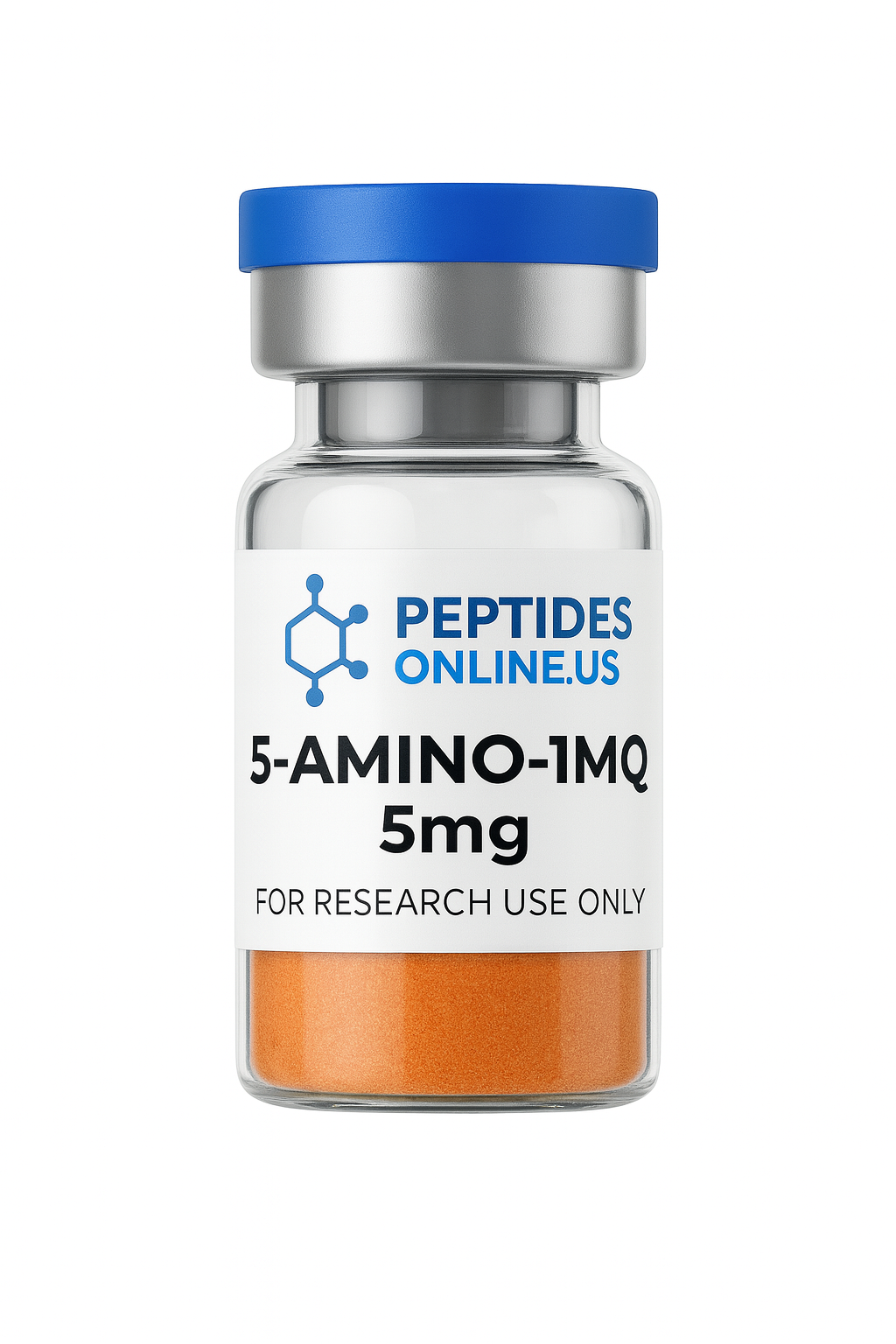
5-Amino-1MQ (NNMT inhibitor) 5mg
Researchers found that changing the enzyme nicotinamide N-methyltransferase (NNMT) can affect how cells use energy. From that discovery, 5 Amino 1MQ, short for 5-Amino-1-Methylquinolinium, was developed for laboratory investigation. It’s a small, non-peptide molecule studied for its role in cellular metabolism and energy balance.
5-Amino-1MQ influences levels of nicotinamide adenine dinucleotide (NAD⁺), a vital molecule that supports energy production and cellular repair. Because of its simple structure and precise activity, researchers often use it to study metabolic function and fat metabolism. In lab settings, 5-Amino-1MQ (5mg) offers a reliable value for exploring cellular health and metabolic efficiency under controlled conditions.
Overview of 5-Amino-1MQ
What Is 5-Amino-1MQ? It’s a small-molecule compound that has gained research interest for its role in metabolic regulation and cellular energy. 5-Amino-1MQ works by inhibiting the enzyme NNMT, [1] which influences how cells manage NAD⁺—a key molecule in energy balance and cellular repair.
As a non-peptide, it has a simpler structure suited for precise laboratory studies. The 5 mg form from Peptides Online is research-grade and ensures consistency in experimental use. When stored correctly, 5-Amino-1MQ supports reliable studies into cellular metabolism, body composition, and metabolic efficiency.
5-Amino-1MQ Molecular and Physical Properties
5-Amino-1MQ has unique molecular and physical properties that make it ideal for controlled research. Its stable composition and solubility support precise studies on cellular activity and healthy metabolism when handled correctly. Supplied as a lyophilized powder, it maintains purity and stability during storage, offering consistent performance in studies focused on cellular metabolism and energy regulation.
Chemical Structure and Formula
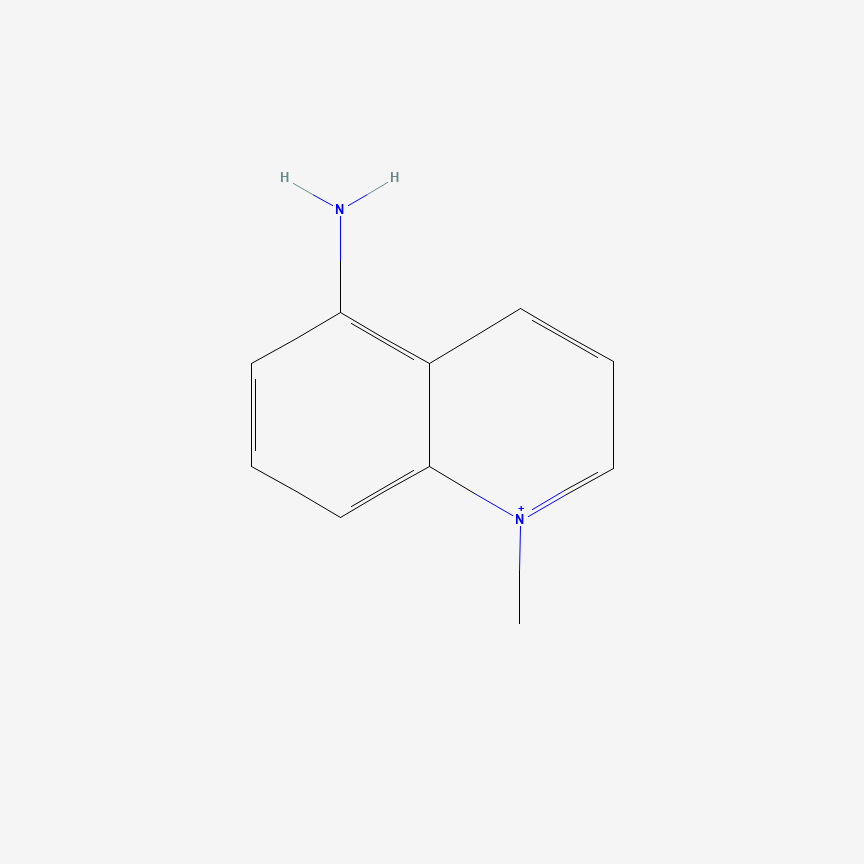
5-Amino-1-MQ is a quinolinium-based small molecule featuring a 5-amino and 1-methyl substitution on the quinoline core. [2] It has been studied as a selective inhibitor of the enzyme Nicotinamide N-methyltransferase (NNMT), which participates in nicotinamide metabolism and cellular energetics. [3]
-
Peptide Sequence: N/A (it is a small molecule, not a peptide)
-
Molecular Formula: C₁₀H₁₁N₂⁺ (cation)
-
Molecular Weight: 189.22 g/mol
-
CAS Number: 1807988-02-8
-
PubChem CID: 950107 (for 5-Amino-1-methylquinolinium)
-
Synonyms: 5-Amino-1-methylquinolinium, 5-Amino-1MQ, NNMTi (in some vendor/chemical-book listings)
Lyophilized (Freeze-Dried) Form for Stability
5-Amino-1MQ (5mg) is supplied in a lyophilized, or freeze-dried, form to protect its molecular structure during storage and transport. This process removes moisture while maintaining chemical integrity. The powder form helps extend shelf life and supports accurate reconstitution in research environments.
Controlled conditions reduce risks from heat, humidity, or light exposure. Peptides Online provides 5-Amino-1MQ in this stabilized format, ensuring purity, consistency, and reproducibility in laboratory applications that examine metabolic pathways and cellular processes.
Solubility and Preparation Notes
5-Amino-1MQ (5mg) shows dependable solubility in research solvents such as DMSO or ethanol, depending on study requirements. Its cationic charge influences how it interacts with both aqueous and organic solutions.
Reconstitution should take place under sterile, controlled conditions to maintain accuracy. pH balance and solvent polarity can affect solubility and stability. Gentle mixing—without heat—preserves structure.
Peptides Online supplies high-purity 5-Amino-1MQ formulated for consistent performance and reliable results in metabolic research applications.
Research and Applications for 5-Amino-1MQ
5-Amino-1MQ is widely studied for its influence on NNMT activity and metabolic function. Research explores its connection to energy metabolism, cellular repair, and enzyme regulation, supporting broader investigations into health goals linked to metabolic balance.
Current studies focus on understanding how it affects NAD⁺ levels, fat metabolism, and cellular efficiency. These investigations continue to expand 5-Amino-1MQ's role in biochemical, metabolic, and longevity research fields.
Mechanism of Action – NNMT Enzyme Inhibition
The enzyme NNMT (nicotinamide N-methyltransferase) plays a central role in how cells process nicotinamide and manage energy metabolism. [4] When NNMT activity increases, it can alter metabolic balance and contribute to reduced metabolic efficiency and increased fat accumulation.
In research, 5-Amino-1MQ binds to NNMT and slows this activity. This allows scientists to observe changes in NAD⁺ handling, cellular energy output, and mechanisms linked to muscle maintenance and preservation under controlled experimental conditions. Its precise and selective inhibition makes it valuable for studying enzyme regulation, metabolic pathways, and biochemical control within experimental systems.
Studies on Metabolic Health and Weight Management
Research on 5-Amino-1MQ focuses on its link to metabolic regulation and fat metabolism through NNMT inhibition. Unlike traditional weight loss methods that focus on calorie restriction or exercise, laboratory studies examine 5-Amino-1MQ’s effects at the molecular level.
Scientists observe how reduced NNMT activity affects energy expenditure, fat storage, lean muscle mass, and adipocyte behavior. [5] These areas are often examined in relation to metabolic and cardiovascular disease research, including laboratory studies modeling metabolic syndrome and its impact on energy balance.
These experiments provide insight into how cells manage metabolic efficiency and lipid balance. Early findings highlight its potential as a reliable compound for examining metabolic slowdown, fat tissue function, and the biochemical mechanisms tied to weight management and energy balance in laboratory models.
Research Into Cellular Energy and NAD⁺ Metabolism
NAD⁺ is vital for cellular energy, mitochondrial function, and cell repair. It also helps cells maintain energy levels under varying metabolic conditions. Studies show that NNMT consumes nicotinamide, a key NAD⁺ precursor. When 5-Amino-1MQ inhibits NNMT, it helps preserve available nicotinamide for NAD⁺ synthesis.
This effect lets researchers observe shifts in energy production and cellular energy processes, including studies modeling age-related muscle loss, as well as oxidative balance. Laboratory models use the compound to explore ATP generation, redox reactions, and cellular metabolism. [6] This helps scientists support metabolic function and deepen understanding of how NNMT regulation connects to metabolic health and overall cellular efficiency.
Investigations Into Cancer and Cellular Health
Researchers study NNMT activity in cancer biology because it affects cell metabolism, growth, and repair processes. Overexpression of NNMT has been linked to altered cellular signaling and stress responses. In laboratory settings, 5-Amino-1MQ helps model these effects by selectively blocking NNMT. [7]
This allows scientists to examine how enzyme inhibition influences methylation balance, redox control, and cell differentiation. Though not an anticancer drug, it remains a valuable tool for studying cellular health and metabolic adaptation.
Pharmacokinetic and Pharmacodynamic Insights
Pharmacokinetics (PK) and pharmacodynamics (PD) describe how compounds behave in research models. [8] In PK studies, scientists track how 5-Amino-1MQ is absorbed, distributed, and metabolically processed. PD research examines how varying concentrations affect NNMT inhibition and enzyme activity.
Findings show that molecular size and positive charge influence movement and retention within systems. Together, these studies help researchers understand metabolic stability and cellular interactions, shedding light on its behavior as a reference compound.
Future Research Directions and Potential Uses
Current studies aim to expand the use of 5-Amino-1MQ beyond metabolic research. Scientists are exploring its role in cellular repair, mitochondrial function, and aging-related processes. These studies may help promote healthy aging, preserve muscle mass, and contribute to comprehensive wellness strategies.
Researchers also aim to better understand how the body manages to burn fat and lose weight. Ongoing work examines how NNMT inhibition affects metabolic disorders and neurodegenerative models. [9]
Computational modeling helps refine its structure for future enzyme studies. Because of its consistency and clear mechanism, 5-Amino-1MQ continues to guide research on biochemical regulation, energy metabolism, and cellular resilience under controlled laboratory conditions.
Product Quality and Testing
5-Amino-1MQ (5mg) from Peptides Online is produced under strict laboratory standards to maintain purity and consistency. Each batch undergoes analytical testing to confirm identity, quality, and molecular integrity.
Results are verified through advanced equipment before release. This process ensures the compound meets research-grade requirements for accuracy, reproducibility, and reliable performance in experimental studies.
Purity and Identity Verification
Each batch of 5-Amino-1MQ (5mg) is verified using advanced analytical tools such as HPLC and Mass Spectrometry. These tests confirm molecular identity, purity, and consistency. Additional methods, like NMR spectroscopy, validate the chemical structure before distribution.
Every sample is screened for contaminants and residual solvents. This strict process ensures research-grade quality, supporting accuracy and reproducibility. Detailed documentation and analytical reports provide transparency and reliability for laboratories conducting metabolic and biochemical studies.
Certificate of Analysis (COA) Availability
A Certificate of Analysis (COA) verifies the authenticity and quality of each 5-Amino-1MQ (5mg) batch. Independent testing confirms purity, molecular identity, and appearance using validated methods like HPLC, MS, and NMR. The COA lists analytical results to ensure transparency and traceability.
Peptides Online provides these certificates to support research documentation and quality assurance. When you buy 5-Amino-1MQ, the COA helps confirm consistency, accuracy, and compliance with research-grade laboratory standards.
Storage and Handling Guidelines
5-Amino-1MQ (5mg) should be stored in a cool, dry environment, ideally under refrigeration, to preserve its molecular stability. Keep the container tightly sealed to protect against moisture, heat, and light exposure. When handling the lyophilized powder, use sterile tools and gloves to prevent contamination.
Allow the vial to reach room temperature before opening. Reconstitution should occur under controlled lab conditions using appropriate solvents. We package 5-Amino-1MQ to maintain purity, consistency, and stability, ensuring dependable results in research applications.
Safety and Compliance
5-Amino-1MQ (5mg) is intended only for research use and not for human or veterinary consumption. Peptides Online follows international standards to ensure safe distribution for controlled studies. Laboratory staff should wear gloves, coats, and eye protection when handling the compound.
Proper ventilation and containment reduce particle exposure, and all researchers must be trained in handling chemicals safely. The compound supports in vitro and ex vivo studies, aligning with ethical and regulatory guidelines for responsible laboratory research.
Disclaimer
5-Amino-1MQ (5mg) is intended strictly for laboratory research purposes. It is not approved for human, veterinary, or diagnostic use. This product must be handled and stored in controlled research environments by qualified professionals following standard safety protocols. The information provided here is for scientific and educational reference only and should not be viewed as medical or legal advice. All details support transparency, accuracy, and responsible research use of 5-Amino-1MQ in scientific investigations.
References and Supporting Literature
-
Neelakantan, H., Vance, V., Wetzel, M. D., Wang, H. L., McHardy, S. F., Finnerty, C. C., Hommel, J. D., & Watowich, S. J. (2018). Selective and membrane-permeable small molecule inhibitors of nicotinamide N-methyltransferase reverse high-fat diet-induced obesity in mice. Biochemical Pharmacology, 147, 141–152. PMC
-
Neelakantan, H., Wang, H.-Y. L., Vance, V., Hommel, J. D., [et al.] (2017). Structure–Activity Relationship for Small Molecule Inhibitors of Nicotinamide N-Methyltransferase. Journal of Medicinal Chemistry, 60(12), 4988–5001. ResearchGate
-
5-Amino-1-methylquinolinium chloride. (n.d.). PubChem Compound Database, CID 176507677. PubChem
-
Conlon, N., & Ford, D. (2022). A systems-approach to NAD⁺ restoration. Biochemical Pharmacology, 198, 114946. ScienceDirect
-
Xu, W., Zhao, M., Zhang, X., Zhang, F., Yin, L., Wang, L., & Zhou, Y. (2022). Effect of nicotinamide N-methyltransferase on lipid accumulation, triglyceride content, adipocyte differentiation-related transcription factors and genes in human adipocyte models. Biomedicine & Pharmacotherapy, 156, 113942. PMC
-
Sun, W.-D., Zhu, X.-J., Li, J.-J., Mei, Y.-Z., Li, W.-S., & Li, J.-H. (2024). Nicotinamide N-methyltransferase (NNMT): a novel therapeutic target for metabolic syndrome. Frontiers in Pharmacology, 15, 1410479. PMC
-
Yu, H., Zhou, X., Wang, Y., Huang, X., Yang, J., Zeng, J., Li, G., Xie, X., & Zhang, J. (2020). Nicotinamide N-methyltransferase inhibits autophagy induced by oxidative stress through suppressing the AMPK-ULK1 pathway in breast cancer cells. Cancer Cell International, 20, 191. PMC
-
Open Resources for Nursing (Open RN); Ernstmeyer K., Christman E. (Eds.). (2023). Nursing Pharmacology (2nd ed., Chapter 1: “Pharmacokinetics & Pharmacodynamics”). Eau Claire, WI: Chippewa Valley Technical College. NLM-NIH
-
Liu, A., Zhu, X.-J., Sun, W.-D., Bi, S.-Z., Zhang, C.-Y., Lai, S.-Y., & Li, J.-H. (2025). Nicotinamide N-methyltransferase as a potential therapeutic target for neurodegenerative disorders: Mechanisms, challenges, and future directions. Experimental Neurology, 389, 115253. PubMed