


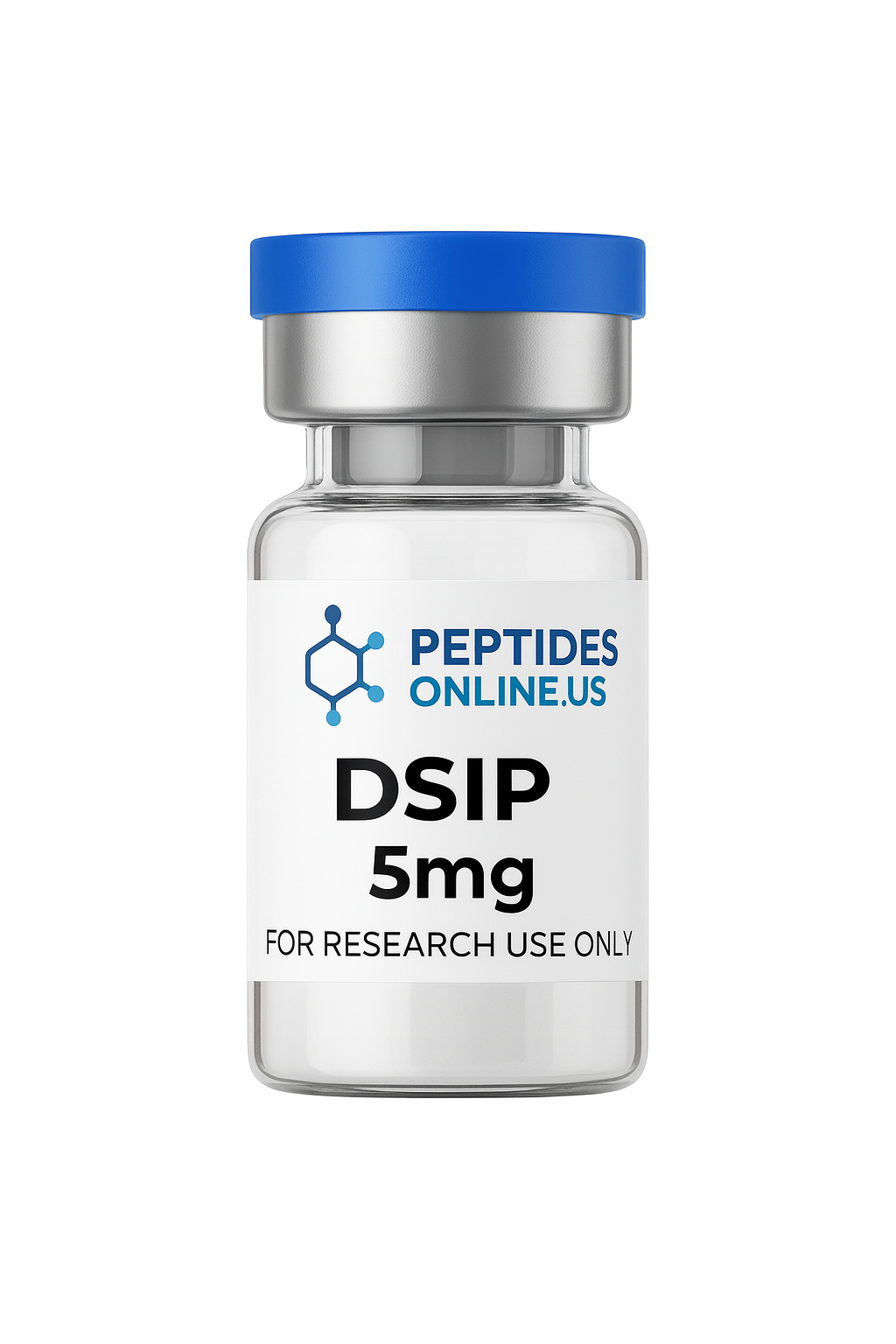
DSIP (Delta Sleep-Inducing Peptide) – 5mg
DSIP, or Delta Sleep-Inducing Peptide, is a naturally occurring neuropeptide studied for its relationship to sleep regulation and biological rhythms. It was first identified in the 1970s during sleep studies that focused on slow-wave activity. Since then, DSIP has gained attention for its potential role in maintaining circadian rhythm and adaptive stress responses under laboratory conditions.
With its simple molecular structure and broad neurochemical relevance, DSIP remains a valuable subject of modern peptide research. It’s often explored in controlled studies that investigate sleep quality, neuroendocrine balance, and peptide signaling pathways.
What Is Delta Sleep-Inducing Peptide (DSIP)?
What is DSIP? It is a short peptide first identified in 1977 by researchers studying slow-wave sleep in rabbits. [1] Researchers identified it as a small, active molecule found in the brain and other tissues. DSIP’s structure sets it apart from other peptides investigated for neurological or circadian functions.
You encounter DSIP often in laboratory research focused on sleep cycles, sleep pressure, stress adaptation, and neurochemical balance. Because DSIP is sensitive to environmental conditions, laboratories rely on high-purity samples for reproducible data. This precision ensures reliable analysis of peptide function in controlled experimental environments.
How DSIP Functions in the Body
Research suggests DSIP plays a role in regulating sleep cycles, sleep latency, and maintaining circadian rhythm. It is often classified among endogenous sleep substances that influence rest and recovery. Research also suggests that this peptide interacts with neurochemical systems influencing rest, alertness, and stress response. [2]
Under controlled conditions, DSIP peptide appears to affect peptide signaling related to homeostasis and biological adaptation. Its short amino acid sequence contributes to its fast absorption and quick breakdown during experiments. These characteristics make it valuable for studying neuronal communication and molecular pathways. Ongoing research continues to investigate DSIP’s role in brain activity and restorative sleep patterns.
Molecular Structure and Properties
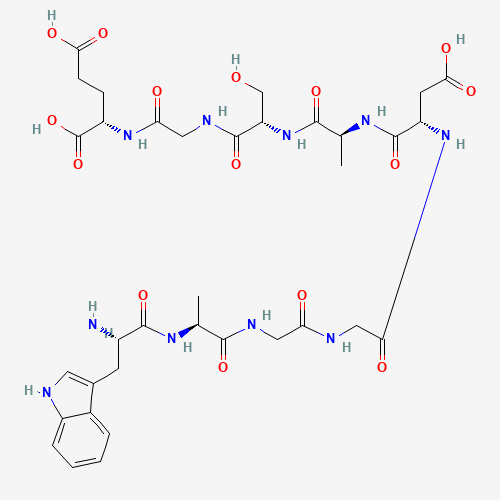
DSIP peptides have a simple yet biologically meaningful molecular profile. This information helps support detailed peptide research and makes it easier to compare results across different studies:
-
Peptide Sequence: Trp–Ala–Gly–Gly–Asp–Ala–Ser–Gly–Glu [3]
-
Molecular Formula: C₃₅H₄₈N₁₀O₁₅
-
Molecular Weight: 850.0 g/mol (as provided)
-
CAS Number: 69558-55-0 (as you specified)
-
PubChem CID: 16132397 (commonly associated with DSIP)
-
Synonyms: Delta Sleep-Inducing Peptide, DSIP
These properties help you anchor analytical methods and confirm purity when working with DSIP in controlled experimental work.
Peptide Characteristics and Stability
DSIP is commonly supplied as a lyophilized powder to preserve its structure and purity. This freeze-dried form protects the peptide from moisture and temperature damage during storage. Lyophilization also helps extend DSIP’s stability for long-term laboratory use.
Before experiments, you reconstitute DSIP using sterile, research-grade solvents to maintain consistency. Factors such as temperature, pH, and light exposure can affect peptide stability. DSIP peptides from Peptides Online meet strict quality standards to ensure purity, reproducibility, and structural integrity under regulated laboratory conditions for reliable experimental analysis.
DSIP Research Applications
Researchers study DSIP across several experimental fields that involve biological rhythm and adaptive processes. It is investigated particularly for its influence on sleep regulation, chronic discomfort models, and metabolic function.
Current studies also explore DSIP’s relationship with mood, addiction response, and cellular resilience. Its broad biological relevance keeps DSIP central to ongoing research in neuroendocrine balance, recovery mechanisms, and physical performance support within regulated scientific settings.
DSIP, Sleep Regulation, and Circadian Rhythm
DSIP has long been a peptide of interest in studies on sleep regulation, sleep disorders, sleep deprivation, and biological rhythm. Researchers first linked it to slow-wave sleep patterns, circadian stability, and changes in body temperature in early neuroendocrine studies. [4] Under controlled laboratory conditions, DSIP has been observed to influence neurochemical systems related to rest and alertness.
Laboratories often use DSIP to study peptide signaling and adaptive mechanisms that affect sleep onset and maintenance. Because of its unique structure, DSIP continues to serve as a reliable model for investigating sleep-related biochemical pathways.
Studies on DSIP and Chronic Discomfort
Researchers have studied DSIP in laboratory models examining its possible role in regulating chronic discomfort and chronic pain pathways. Controlled experiments have observed DSIP’s influence on stress-related and pain-modulating systems within the nervous system. [5] Preclinical data suggest DSIP may participate in adaptive peptide signaling and neurochemical balance during prolonged stress exposure.
Ongoing studies evaluate DSIP’s interaction with molecular mechanisms that contribute to homeostasis and biological adaptation. All investigations are performed within regulated research environments, focusing strictly on scientific understanding rather than clinical or therapeutic application.
Research on DSIP and Energy Metabolism
Laboratory research has examined DSIP’s possible influence on metabolic regulation and cellular energy processes. Controlled experiments have observed DSIP’s interaction with pathways that affect mitochondrial function and oxygen utilization. [6] These findings suggest a potential link between DSIP and adaptive biochemical responses related to energy balance.
Researchers also explore how DSIP may participate in neuroendocrine signaling connected to rest and recovery. Current studies continue to clarify DSIP’s contribution to energy metabolism, focusing on its molecular role in maintaining physiological stability under experimental conditions.
DSIP and Mood Support Mechanisms
Researchers have studied DSIP to better understand its connection to mood-related biological processes. Controlled laboratory studies show that DSIP interacts with neurotransmitter systems involved in adaptive stress and behavioral responses. [7] These interactions appear to influence pathways connected to calmness and resilience.
Experimental models also explore DSIP’s potential role in hormonal and peptide signaling that supports emotional balance. While the exact mechanisms remain under investigation, DSIP continues to be an important focus in neurochemical and behavioral research on mood-related biological processes.
Investigations Into Addiction and Withdrawal Studies
Scientists have examined DSIP in experimental studies related to addiction, dependency, and withdrawal response. Laboratory models have explored how DSIP may interact with neurochemical systems that influence stress recovery and adaptive behavior. Controlled findings indicate that DSIP could affect signaling pathways connected to reward processing and mood stabilization.
These studies aim to clarify DSIP’s role in moderating biological responses during withdrawal. [8] All experiments involving DSIP in addiction research remain under strict laboratory regulation and are conducted solely for scientific and educational purposes.
DSIP and Cellular Defense Mechanisms
Laboratory research has explored DSIP’s potential role in supporting cellular defense and adaptive stress responses. Controlled experiments have been performed to understand how DSIP influences antioxidant activity, cytoprotective mechanisms, and immune function at the cellular level. [9] These findings suggest DSIP may contribute to maintaining cellular stability during oxidative or environmental stress conditions.
Researchers also examine DSIP’s possible involvement in immune and metabolic regulation pathways. While these studies remain in the experimental phase, they provide valuable insight into DSIP’s contribution to cellular balance, integrity, and overall biological resilience.
DSIP and Physical Performance Support
Researchers have explored DSIP’s potential influence on endurance, recovery, and fatigue resistance. Experimental data indicate that DSIP may play a role in maintaining metabolic balance and energy restoration during physical stress. Controlled studies also examine how DSIP supports adaptive responses related to rest and recovery cycles.
Investigations focus on DSIP’s ability to regulate peptide signaling and neuroendocrine activity connected to exertion. All DSIP research in this area remains limited to laboratory observation and scientific exploration under regulated, non-clinical research conditions.
Key Findings and Scientific Insights
DSIP continues to attract scientific attention for its wide-ranging biological significance. It has even been detected in human breast milk, underscoring its relevance in understanding naturally occurring peptide systems.
Some studies also include measurements of cerebral venous blood to better understand DSIP’s association with brain activity and rest cycles. Others focus on DSIP’s contribution to peptide signaling, endocrine modulation, and adaptive physiological responses.
Emerging findings highlight DSIP’s role across neuroscience and metabolic research. These ongoing investigations aim to clarify its molecular mechanisms and expand understanding of peptide behavior in controlled laboratory environments.
Potential Neuroprotective and Hormonal Effects
Researchers have examined DSIP for its potential neuroprotective properties in maintaining neuronal stability and reducing oxidative stress. Studies suggest DSIP may influence neural communication and peptide signaling associated with synaptic activity. These findings provide insight into its possible role in supporting brain health and overall neural equilibrium.
DSIP has also been studied for its relationship with hormonal systems that manage stress and adaptation. Current data indicate DSIP’s effects on neuroendocrine pathways remain under investigation through controlled, peer-reviewed scientific studies.
Endocrine System Modulation and Stress Response
Research on DSIP has examined its influence on endocrine regulation and hormonal balance. Laboratory findings indicate DSIP may interact with peptide pathways connected to the pituitary and hypothalamus. These interactions appear to influence adaptive responses tied to stress, rest, and recovery.
Controlled experiments also explore DSIP’s possible role in modulating hormone secretion patterns within neuroendocrine systems. While results vary across models, DSIP remains a focus for researchers studying stress physiology, circadian rhythm control, and endocrine communication in preclinical settings.
Research Summary and Emerging Interest Areas
Current research on DSIP highlights its diverse applications across neuroscience, endocrinology, sleep research, and metabolic science. Studies examine its potential role in regulating biological rhythms, neurochemical communication, and stress adaptation. Researchers also explore DSIP’s effects on cellular defense, recovery, and energy metabolism, as well as how certain laboratory models use it to study factors that improve sleep architecture.
Advancements in peptide synthesis and analytical techniques now allow for greater accuracy in DSIP research. Because of its versatility, DSIP continues to attract growing interest in understanding peptide interactions and their relevance to complex biological systems.
Product Quality and Testing Standards
DSIP – 5mg undergoes strict analytical testing to confirm its purity, structure, and consistency. Each batch is evaluated using high-performance liquid chromatography (HPLC) and mass spectrometry (MS) to verify the integrity of its peptide sequence. Peptides Online maintains a minimum purity standard of 99%.
These quality control measures help prevent contamination and support batch-to-batch reliability. Every DSIP product includes a verified Certificate of Analysis (COA) that outlines test results, molecular identity, and verified specifications, ensuring dependable performance and traceability for laboratory research use. Researchers looking to buy DSIP can trust that each vial meets precise research-grade standards backed by comprehensive quality testing.
Certificate of Analysis (COA) Availability
A Certificate of Analysis (COA) confirms the quality, authenticity, and verified purity of DSIP – 5mg. Each COA includes detailed data such as molecular identity confirmation, purity percentage, and analytical test results from HPLC and MS evaluations.
Peptides Online provides a COA for every DSIP batch, prepared by certified laboratories. These certificates allow you to confirm compliance with research-grade quality benchmarks. Transparent COA documentation supports traceability, data integrity, and scientific confidence. With verified results, researchers can rely on DSIP’s consistency for controlled experiments in professional laboratory environments.
Handling and Storage Guidelines
DSIP - 5mg should be stored in a dry, temperature-controlled environment between –20°C and –10°C. This cold storage preserves its lyophilized form and prevents degradation. Handle the vial carefully to avoid exposure to moisture or light, which can reduce stability.
When reconstituting DSIP, use sterile, research-grade solvents to maintain accuracy and purity. Label and store freshly prepared solutions at 2°C to 8°C for short-term laboratory use. DSIP is intended solely for controlled research by qualified professionals and is not approved for human or veterinary application.
Disclaimer
DSIP – 5mg is intended strictly for laboratory research purposes. It is not approved for human, veterinary, or diagnostic use. Only qualified professionals should handle this peptide in controlled research environments that follow standard safety and compliance protocols. The information presented here is for scientific and educational reference only. It should not be interpreted as medical, therapeutic, or legal advice. All data are provided to promote transparency, accuracy, and responsible laboratory research involving DSIP, supporting safe and ethical scientific practices.
References and Scientific Sources
-
Delta-sleep-inducing peptide (DSIP). (n.d.). In ScienceDirect Topics: Biochemistry, Genetics and Molecular Biology. ScienceDirect
-
Khvatova, E. M., Samartzev, V. N., Zagoskin, P. P., Prudchenko, I. A., & Mikhaleva, I. I. (2003). Delta sleep inducing peptide (DSIP): effect on respiration activity in rat brain mitochondria and stress protective potency under experimental hypoxia. Peptides, 24(2), 307–311. PubMed
-
Graf, M. V., & Kastin, A. J. (1984). Delta-sleep-inducing peptide (DSIP): a review. Neuroscience & Biobehavioral Reviews, 8(1), 83–93. PubMed
-
Friedman, T. C., Garcia-Borreguero, D., Hardwick, D., Akuete, C. N., Stambuk, M. K., Dorn, L. D., Starkman, M. N., Loh, Y. P., & Chrousos, G. P. (1994). Diurnal rhythm of plasma delta-sleep-inducing peptide in humans: Evidence for positive correlation with body temperature and negative correlation with rapid eye movement and slow wave sleep. The Journal of Clinical Endocrinology & Metabolism, 78(5), 1085–1089. PubMed
-
Nakamura, A., Nakashima, M., Sugao, T., Kanemoto, H., Fukumura, Y., & Shiomi, H. (1988). Potent antinociceptive effect of centrally administered delta-sleep-inducing peptide (DSIP). European Journal of Pharmacology, 155(3), 247–253. ScienceDirect
-
Tukhovskaya, E. A., Ismailova, A. M., Shaykhutdinova, E. R., Slashcheva, G. A., Prudchenko, I. A., Mikhaleva, I. I., Khokhlova, O. N., Murashev, A. N., & Ivanov, V. T. (2021). Delta Sleep-Inducing Peptide recovers motor function in SD rats after focal stroke. Molecules, 26(17), 5173. MDPI
-
Graf, M., Baumann, J. B., Girard, J., Tobler, H. J., & Schoenenberger, G. A. (1982). DSIP-induced changes of the daily concentrations of brain neurotransmitters and plasma proteins in rats. Pharmacology Biochemistry & Behavior, 17(3), 511–517. PubMed
-
Dick, P., Costa, C., Fayolle, K., Grandjean, M. E., Khoshbeen, A., & Tissot, R. (1984). DSIP in the treatment of withdrawal syndromes from alcohol and opiates. European Neurology, 23(5), 364–371. PubMed
-
Bondarenko, T. I., Maiboroda, E. A., Mikhaleva, I. I., & Prudchenko, I. A. (2011). Mechanism of geroprotective action of delta-sleep inducing peptide. Advances in Gerontology, 1, 328–339. Springer