


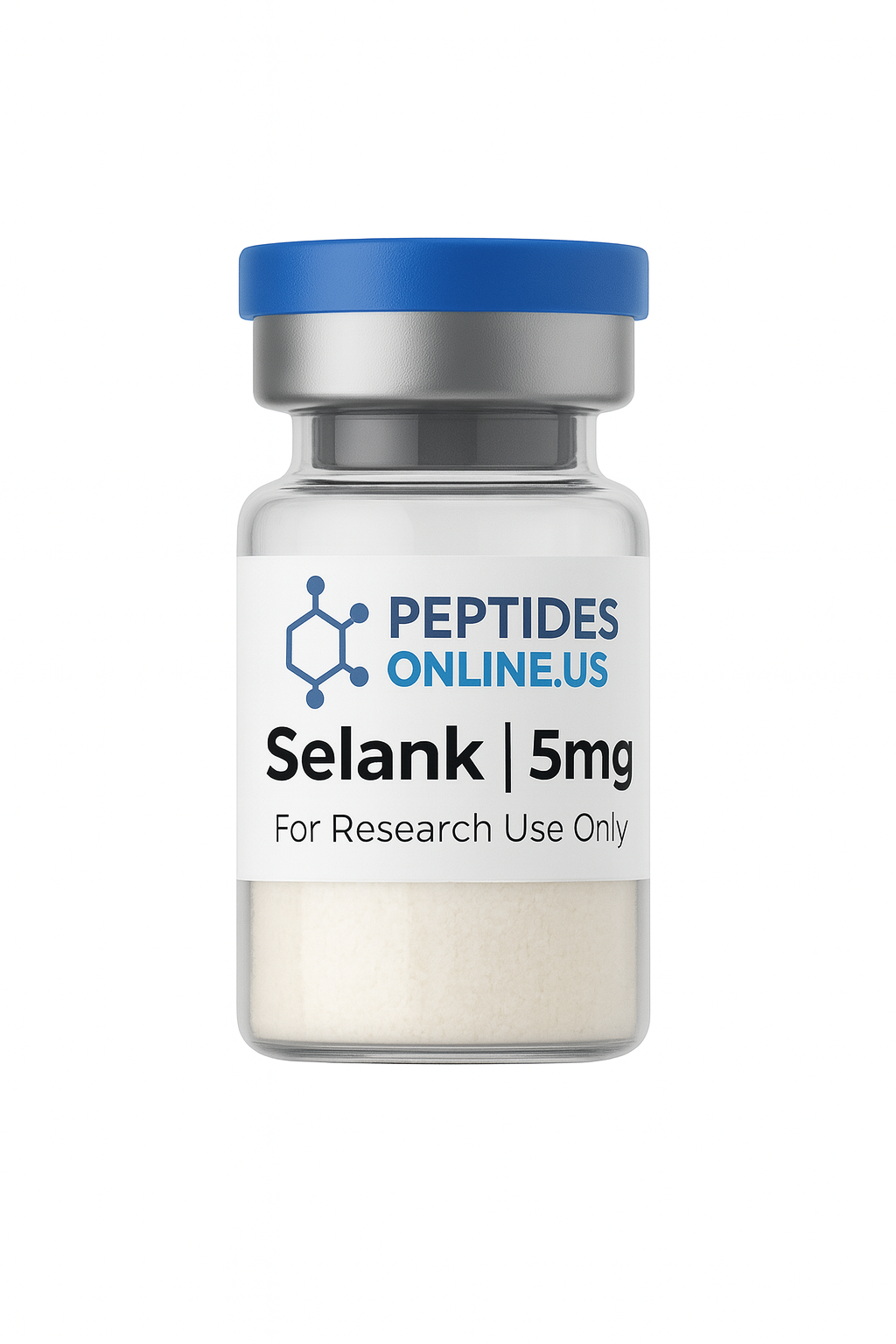
Selank (5mg)
Selank is a synthetic analog of tuftsin, a natural peptide known for supporting immune-related functions. Developed by scientists at the Russian Academy of Sciences, this peptide was designed to help researchers study how short amino acid chains interact with neurochemical processes, stress response, and cognitive function.
Selank’s heptapeptide structure and high molecular stability make it a dependable compound for laboratory studies exploring molecular genetics, behavioral responses, and nervous system regulation. In controlled research environments, selank peptide (5mg) provides a consistent way to examine how regulatory peptides interact with the central nervous and immune systems. Its Tuftsin-derived sequence draws scientific interest in experimental pharmacology and neurochemical research.
Peptide Overview
What is Selank? It's a peptide first synthesized by Russian scientists at the Institute of Molecular Genetics. It was designed as a short peptide sequence modeled after tuftsin. [1] The goal was to create a stable neuropsychotropic compound that researchers could use to study how small peptide chains interact with neurochemical and behavioral processes.
Scientific interest in Selank continues to grow due to its observed role in regulating genes involved in GABAergic neurotransmission. It is also valued as a model compound for examining stress response, learning mechanisms, and nervous system regulation, contributing to ongoing research on neurological development and keeping the peptide anxiolytic Selank relevant in molecular genetics and behavioral studies.
Compared to other neuroactive peptides, Selank stands out for its stability and pronounced anxiolytic activity in controlled studies. In laboratory research, Selank is tested under strict experimental conditions focused on memory and cognitive function.
Molecular Structure of Selank
Selank is a synthetic heptapeptide developed from the natural tetrapeptide Tuftsin (Thr–Lys–Pro–Arg), a natural tetrapeptide also found in human serum. It was designed to enhance peptide stability and resistance to enzymatic degradation while maintaining neuroactive and immunomodulatory properties. In laboratory research, Selank is examined for its influence on neurochemical balance, stress response, and nervous system regulation.
-
Peptide Sequence: Thr–Lys–Pro–Arg–Pro–Gly–Pro
-
Molecular Formula: C₃₃H₅₇N₁₁O₉ [2]
-
Molecular Weight: 751.9 g/mol
-
CAS Number: 129954-34-3
-
PubChem CID: 11765600
-
Synonyms: Selanc; TP-7; Thr-Lys-Pro-Arg-Pro-Gly-Pro; Heptapeptide Selank; Tuftsin analog
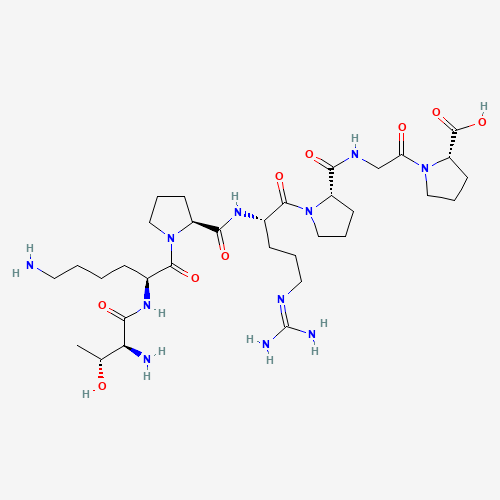
These properties help ensure consistent behavior in solution. Selank’s stability remains optimal at neutral pH and low temperatures. This helps preserve its molecular integrity during storage.
In controlled studies, Selank interacts with receptors studied for their role in GABAergic neurotransmission. Its peptide bonds and folding pattern allow predictable activity. These features make Selank valuable for experimental optimization in neurochemical and behavioral research.
Selank Peptide Research and Findings
Selank peptide has been widely studied for its influence on several neurobiological processes. Research focuses on its interaction with genes linked to GABA synthesis, immune modulation, and memory-related pathways, as well as its documented anxiolytic effects in controlled environments. These areas are often explored in peptide therapy and neurochemical regulation studies.
Scientists have also examined how selank administration affects behavioral and stress responses in controlled settings. Current studies continue to analyze its potential role in regulating learning and cognitive function. These investigations form the foundation for understanding the broader effects of selank in experimental pharmacology and drug discovery.
Selank’s Role in GABA-Related Gene Activity
Selank has been observed to influence gene expression related to GABA synthesis and regulation. In experimental models, selank administration affects the expression of enzymes that influence GABAergic neurotransmission and receptor balance. [3]
Researchers have observed significant changes in inhibitory signaling patterns. These findings may be linked to selank’s interaction with enkephalin-degrading enzymes involved in neurochemical regulation.
Compared to similar peptides such as semax, selank displays distinct modulation of GABA-related pathways. These pathways are often studied in relation to anxiety asthenic disorders. This unique action has made selank a focus in studies examining stress adaptation and molecular genetics.
Ongoing research continues to explore how selank’s molecular configuration influences gene activity related to mood regulation, generalized anxiety disorders, and behavioral responses.
Research on Selank and the Immune System
Selank was derived from tuftsin, a natural peptide recognized for its influence on immune activity. This origin makes it valuable in studying immune regulation, neuroimmune communication, and learning and memory processes within neurobiological models.
Laboratory studies suggest that selank may influence cytokine balance and immune cell behavior. [4] Researchers have observed that selank may help inhibit excessive excitatory signaling and stabilize inhibitory action in the brain.
Compared to other peptides with similar origins, selank continues to stand out in immunological studies. Its link to tuftsin remains a key factor driving continued interest in immune-related peptide research.
Studies on the Effects of Selank on Memory and Learning
Researchers have investigated selank’s role in memory and learning processes across different laboratory settings and clinical studies. Some of these experiments involved rats pretreated with selank.
Controlled studies in animal models, including rat brain research, suggest that selank administration, particularly through intranasal administration, has been studied for its influence on neurotransmitter systems related to focus, attention, recall, and mental clarity. [5] These effects appear connected to its influence on genes involved in GABAergic signaling and cognitive adaptation.
Experimental findings show that selank may be involved in pathways related to learning efficiency and information processing. When compared with other neuroactive peptides, selank shows unique patterns of action. These results continue to attract interest in cognitive and neurobehavioral peptide research around the world.
Research on Selank and Physical Discomfort
Studies have explored the new peptide anxiolytic Selank and its potential influence on physical discomfort under tightly controlled conditions. Researchers have focused on its relationship with neurochemical pathways linked to muscle tension, soreness, and stress-induced responses.
Findings suggest that selank administration may influence neurotransmitter systems that can alter how the body reacts to physical strain, similar to pathways examined in studies involving benzodiazepine tranquilizers. [6]
Laboratory results also show possible connections between selank, GABA-related mechanisms, and neuroimmune interactions. These comparative studies examine selank’s activity alongside other peptides investigated for similar purposes.
All current findings involving selank peptides remain limited to preclinical research, emphasizing selank’s value as an experimental compound without approved therapeutic or diagnostic applications.
Documentation and Testing Information
Each batch of Selank Peptide (5mg) undergoes rigorous testing to confirm purity, concentration, and molecular identity. Analytical methods such as HPLC and mass spectrometry verify peptide integrity and confirm that the product meets research-grade standards.
Testing procedures are often performed across three groups of samples to ensure reproducibility and precision. These testing methods are consistent with quality protocols followed by certified laboratories and compounding pharmacy suppliers.
Before distribution, Selank is evaluated for the absence of contaminants, solvents, and synthesis byproducts. Independent third-party laboratories provide verification for transparency and compliance. Every order includes batch-specific documentation and a Certificate of Analysis (COA).
This document allows researchers to review key specifications and quality data before purchasing selank. Proper documentation supports confidence and repeatability in controlled peptide research environments.
Certificate of Analysis (COA)
A Certificate of Analysis (COA) verifies the authenticity and quality of Selank Peptide (5mg). Each batch available when you buy Selank from Peptides Online includes a downloadable COA confirming the peptide’s purity, molecular weight, and composition. Analytical methods such as HPLC and mass spectrometry are used to validate consistency across all batches.
The COA lists details on peptide concentration, sequence confirmation, and the absence of detectable impurities. This document ensures traceability and confidence in laboratory applications. Peptides Online provides COAs for every peptide product offered, demonstrating a commitment to verified quality, transparency, and compliance with research-grade standards for all laboratory use.
Storage and Handling Guidelines
Selank Peptide (5mg) should be stored at temperatures between –20°C and –5°C to maintain molecular stability. Handle the peptide using sterile techniques to prevent contamination and keep selank safe for continued laboratory use. If reconstitution is needed, use sterile water or buffer solutions under clean laboratory conditions.
Reconstituted Selank remains stable for up to two weeks when refrigerated. For long-term storage, freezing is recommended to reduce degradation. Protect the vial from light and moisture, and avoid repeated freeze–thaw cycles. Proper labeling, sealing, and temperature control help preserve peptide integrity and ensure consistent results in laboratory and academic research environments.
Disclaimer
Selank Peptide (5mg) is intended strictly for laboratory research purposes. It is not approved for human, veterinary, or diagnostic use. You should handle this product only in controlled research environments under the supervision of qualified professionals. Proper safety and compliance protocols must always be followed. The information provided here is for scientific and educational reference only. It should not be interpreted as medical, therapeutic, or legal advice. All details are presented to support transparency, accuracy, and responsible research use of Selank Peptide (5mg) in accordance with recognized laboratory standards and ethical research practices.
Additional Notable Studies or Research
-
Volkova, A., Shadrina, M., Kolomin, T., Andreeva, L., Limborska, S., Myasoedov, N., & Slominsky, P. (2016). Selank administration affects the expression of some genes involved in GABAergic neurotransmission. Frontiers in Pharmacology, 7, 31. ResearchGate
-
Selank, C33H57N11O9. (n.d.). PubChem Compound Summary for CID 11765600. PubChem
-
Volkova, A., Shadrina, M., Kolomin, T., Andreeva, L., Limborska, S., Myasoedov, N., & Slominsky, P. (2016). Selank administration affects the expression of some genes involved in GABAergic neurotransmission. Frontiers in Pharmacology, 7, 31. PMC
-
Uchakina, O. N., Uchakin, P. N., Miasoedov, N. F., Andreeva, L. A., Shcherbenko, V. E., Mezentseva, M. V., Gabaeva, M. V., Sokolov, O. Yu., Zozulia, A. A., & Ershov, F. I. (2008). Immunomodulatory effects of selank in patients with anxiety-asthenic disorders. Zhurnal Nevrologii i Psikhiatrii imeni S.S. Korsakova, 108(5), 71–75. PubMed
-
Narkevich, V. B., Kudrin, V. S., Klodt, P. M., Pokrovskii, A. A., Kozlovskaya, M. M., Maiskii, A. I., & Raevskii, K. S. (2008). Effects of heptapeptide Selank on the content of monoamines and their metabolites in the brain of BALB/C and C57BL/6 mice: A comparative study. Экспериментальная и клиническая фармакология, 71(5), 8–12. ResearchGate
-
Volkova, A., Shadrina, M., Kolomin, T., Andreeva, L., Limborska, S., Myasoedov, N., & Slominsky, P. (2016). Selank Administration Affects the Expression of Some Genes Involved in GABAergic Neurotransmission. Frontiers in Pharmacology, 7, 31. PubMed