


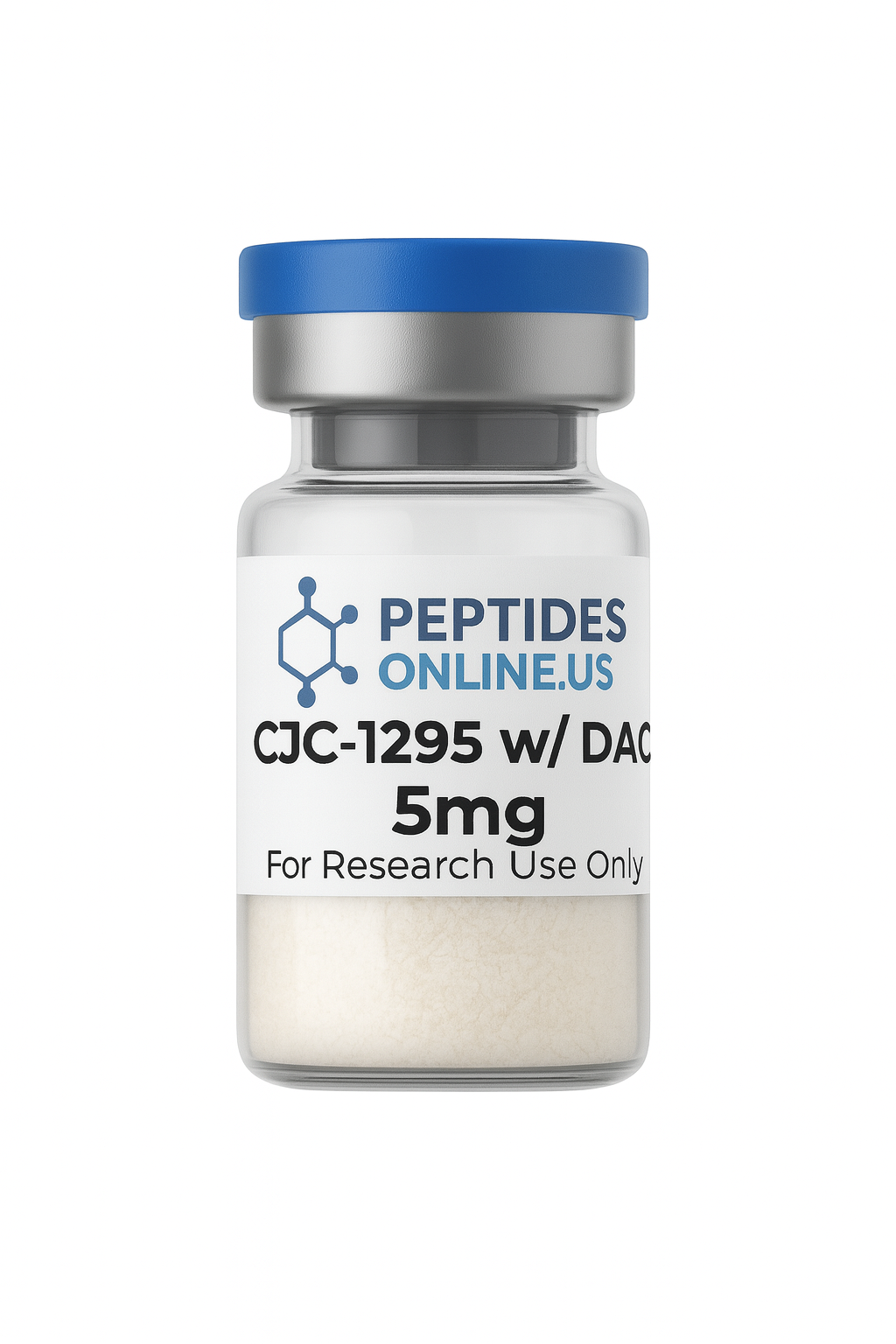
CJC-1295 with DAC (5mg)
CJC-1295 with DAC is a synthetic peptide created by ConjuChem Biotechnologies to extend the natural activity of growth hormone–releasing hormone (GHRH). The addition of the Drug Affinity Complex (DAC) improves the peptide’s stability and allows it to stay active longer in laboratory studies.
Researchers use CJC-1295 with DAC to study growth hormone and insulin-like growth factor (IGF-1) regulation. Its extended half-life helps scientists observe long-term hormone patterns, protein synthesis, and metabolic processes, making it valuable in advanced peptide and endocrine research.
Overview of CJC-1295 with DAC
CJC-1295 DAC was developed by ConjuChem Biotechnologies in Canada as part of their research into peptide–drug conjugates. The compound emerged from studies on how to extend the biological activity of short-acting growth hormone–releasing hormones. Its discovery combined synthetic peptide engineering with albumin-binding technology, creating a long-acting analog widely studied in peptide and endocrine research.
What Is CJC-1295 with DAC?
CJC-1295 with DAC is a long-acting analog of growth hormone–releasing hormone (GHRH) designed for controlled laboratory research. It helps scientists study the regulation of growth hormone secretion and the timing of hormone pulses.
The peptide binds to receptors in the anterior pituitary gland, triggering natural growth hormone release. Because of its stability and extended half-life, researchers use it to measure sustained endocrine responses, protein synthesis, and IGF-1 activity. [1]
How CJC-1295 Differs from Standard CJC-1295
The DAC attached to the CJC-1295 peptide changes how the peptide behaves in biological systems. It allows the molecule to bind reversibly to albumin, keeping it active longer in circulation. [2] This modification increases its half-life compared to standard CJC-1295, which in turn reduces how often researchers must administer it.
Controlled studies show the DAC-linked peptide maintains higher and longer growth hormone and IGF-1 responses, supporting more consistent laboratory testing and data reliability.
Purpose of the DAC (Drug Affinity Complex)
The DAC is a molecular addition that helps extend the activity of CJC-1295. It works by forming a temporary bond with albumin in the bloodstream. This slows peptide breakdown and allows a steadier release in research models.
The result is a longer half-life and improved peptide stability. Studies show DAC-linked peptides, such as CJC-1295 with DAC, maintain consistent hormone-related activity, improving their utility in growth hormone and IGF-1 research applications.
Molecular Structure and Composition
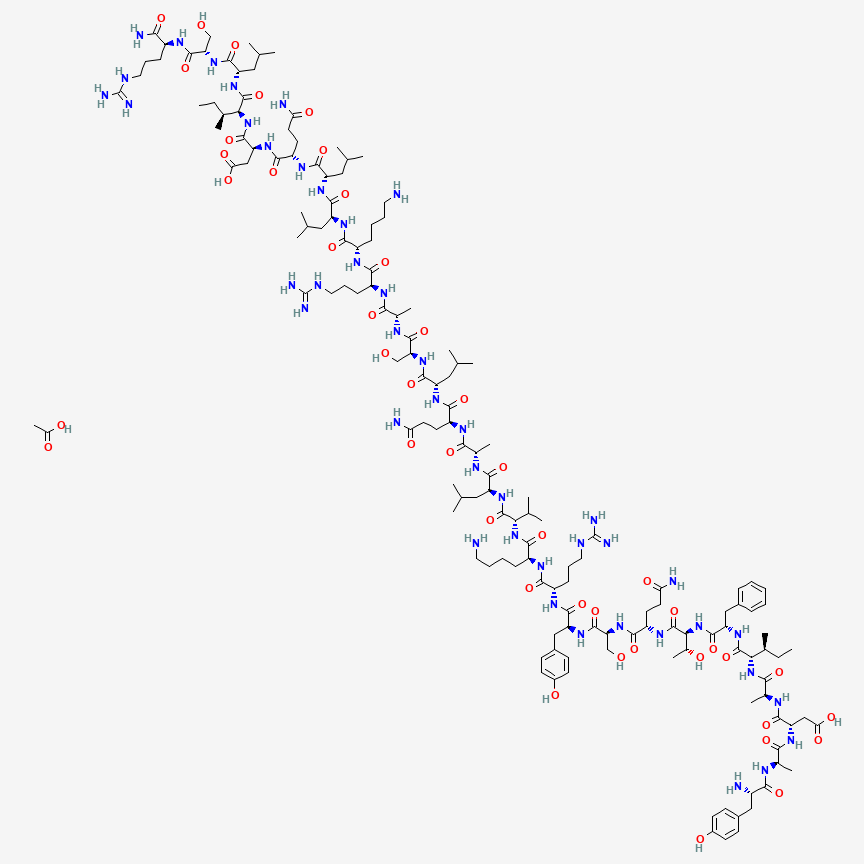
CJC-1295 with DAC has a specialized molecular structure that enhances peptide stability and receptor binding efficiency.
-
Peptide Sequence: H-Tyr-D-Ala-Asp-Ala-Ile-Phe-Thr-Gln-Ser-Tyr-Arg-Lys-Val-Leu-Ala-Gln-Leu-Ser-Ala-Arg-Lys-Leu-Leu-Gln-Asp-Ile-Leu-Ser-Arg-NH2.CH3CO2H
-
Molecular Formula: C154H256N44O44
-
Molecular Weight: 3647.3 g/mol
-
CAS Number: 863288-34-0
-
PubChem CID: 155977624
-
Synonyms: CJC-1295 DAC, Modified GRF 1-29 DAC, CJC-1295 Growth Hormone Releasing Hormone Analog
Mechanism of Action and Interaction with Growth Hormone Releasing Hormone (GHRH)
CJC-1295 with DAC binds to GHRH receptors in the anterior pituitary, triggering natural growth hormone release under controlled research conditions. This activation increases GH secretion, along with IGF-1 levels.
Its extended half-life allows consistent stimulation of GHRH pathways. Research indicates it influences hormone pulse frequency and duration while remaining dependent on hypothalamic–pituitary function. This helps scientists model long-term hormone regulation and metabolic signaling in laboratory environments.
Research-Grade Purity and Lyophilized Form
Research-grade purity ensures CJC-1295 with DAC meets strict standards for consistency and accuracy in laboratory experiments. Each batch is verified through advanced testing methods like high-performance liquid chromatography (HPLC) and mass spectrometry (MS).
Certificates of Analysis confirm purity and molecular identity before release. The peptide’s lyophilized, or freeze-dried, form protects it during shipping and storage. When reconstituted with sterile diluents, it maintains full stability and reliability for precise, repeatable research applications.
CJC-1295 with DAC Research Applications
CJC-1295 with DAC is widely studied in laboratory and clinical research for its role in growth hormone and IGF-1 regulation. Research focuses on its role in cellular processes, metabolism, tissue structure studies, and longevity pathways. Its extended half-life supports long-term studies on peptide hormones and endocrine activity, helping scientists analyze consistent biological responses in controlled laboratory environments.
Growth Hormone and Insulin-Like Growth Factor (IGF-1) Regulation
CJC-1295 with DAC interacts with GHRH receptors to promote steady growth hormone pulses and sustained more growth hormone output. This rise in growth hormone supports IGF-1 production, allowing researchers to study hormone balance and signaling patterns.
Its extended half-life helps maintain consistent hormone levels over time. Studies monitor GH and IGF-1 biomarkers to understand secretion timing, receptor activity, and endocrine feedback within controlled research environments.
Cellular Repair and Recovery Studies
Researchers use CJC-1295 with DAC to study how hormone signaling supports tissue recovery and cell renewal. Growth hormone activity linked to this peptide helps examine protein synthesis and cellular turnover.
Studies show how prolonged hormone stimulation influences fibroblast behavior, collagen formation, and repair protein expression. [3] Scientists measure cell viability, oxidative balance, and recovery markers to evaluate how consistent hormone release affects long-term cellular adaptation and regeneration in controlled experimental environments.
Research on Metabolism and Energy Balance
CJC-1295 with DAC is studied for its influence on metabolism and fat loss through growth hormone and IGF-1 signaling. Research focuses on how these pathways affect glucose control, fat metabolism, and energy use. The peptide’s long activity allows scientists to track metabolic changes over extended periods.
Studies measure oxygen consumption, nutrient oxidation, and mitochondrial performance to understand how hormone-driven regulation impacts energy efficiency, cellular fuel balance, and metabolic stability. [4]
Tissue Regeneration and Muscle Maintenance
CJC-1295 with DAC is also examined for its role in studies on tissue structure and muscle maintenance under research conditions. Studies analyze muscle fiber structure, collagen content, and tissue remodeling markers. [5]
These findings help researchers understand how prolonged hormone activity supports cellular rebuilding, muscle integrity, and overall tissue maintenance under controlled laboratory conditions. [6]
Anti-Aging and Longevity Pathways
Scientists study CJC-1295 with DAC to explore hormone-related processes that affect cellular aging and longevity. Its ability to sustain growth hormone and IGF-1 activity helps model how hormones influence DNA repair and mitochondrial health.
Research examines oxidative balance, protein turnover, and hormone feedback loops that shape cellular lifespan. These studies deepen understanding of how endocrine regulation [7] contributes to long-term maintenance, tissue stability, and overall aging mechanisms in controlled laboratory environments.
Research Comparisons
Studies comparing CJC-1295 with DAC to other peptides focus on how its structure changes hormone release and stability. Researchers often evaluate differences between CJC-1295 with DAC and standard CJC-1295, as well as its complementary role with Ipamorelin.
These comparisons help identify variations in half-life, receptor activity, and growth hormone response across controlled research settings. They are also referenced in peptide therapy–related studies to analyze how different analogs influence hormone dynamics and the duration of biological activity.
CJC-1295 with DAC vs CJC-1295 (Without DAC)
The DAC changes how CJC-1295 behaves once introduced into research systems. It allows the peptide to bind to albumin, slowing its breakdown and extending its half-life. Standard CJC-1295 clears from circulation faster, requiring more frequent administration. [8]
Studies show that DAC-linked versions sustain higher growth hormone and IGF-1 activity, providing longer, more stable responses for consistent testing in controlled research environments.
CJC-1295 with DAC vs Ipamorelin (Complementary Use)
CJC-1295 with DAC and Ipamorelin act on different parts of the growth hormone pathway, with Ipamorelin classified as a growth hormone-releasing peptide. CJC-1295 targets GHRH receptors, while Ipamorelin stimulates ghrelin (GHSR) receptors. [9]
Studies show that combining them can enhance growth hormone pulse strength and duration. Their contrasting half-lives—CJC-1295 being long-acting and Ipamorelin short-acting—help researchers study balanced, rhythmic hormone release and feedback regulation within controlled experimental models.
Laboratory Testing and Quality Control
CJC-1295 with DAC undergoes strict testing to confirm purity, identity, and structural integrity before distribution. Each batch is analyzed using validated laboratory methods and verified through independent review.
Certificates of Analysis document results for every lot, ensuring transparency and consistency. These quality control procedures support reproducible data and high reliability in research applications involving peptide-based compounds.
Certificate of Analysis (COA)
A Certificate of Analysis (COA) confirms the verified purity, identity, and molecular composition of CJC-1295 with DAC. Each COA is based on analytical testing such as high-performance liquid chromatography (HPLC), mass spectrometry (MS), and amino acid analysis. It ensures batch consistency and data accuracy. Peptides Online provides COAs for every lot, supporting transparency, regulatory documentation, and research confidence in peptide-based studies.
Purity and Identity Verification
Each vial of CJC-1295 with DAC is tested to confirm research-grade purity and verified molecular identity. Analytical methods like high-performance liquid chromatography (HPLC), mass spectrometry (MS), and nuclear magnetic resonance (NMR) ensure accuracy. Peptides Online sets a minimum purity of 99% for consistency and reliability. Independent labs validate results, and all verified data are recorded in the Certificate of Analysis for full traceability and compliance.
Storage and Handling Information
CJC-1295 with DAC must be stored carefully to maintain its structure and research quality. Improper storage can cause peptide degradation and reduced stability. Peptides Online follows strict packaging and temperature controls to protect every vial during transport. These measures help ensure each product arrives intact, sterile, and ready for accurate laboratory testing under controlled research conditions.
Lyophilized Powder Storage Guidelines
CJC-1295 with DAC is supplied as a lyophilized powder to preserve molecular stability during shipping and storage. It should be stored at –20°C or lower for long-term preservation. Keep vials sealed and away from light, heat, and moisture. Avoid repeated freeze–thaw cycles to maintain purity. For short-term use, refrigeration at 2–8°C helps protect peptide integrity and supports consistent research results.
Reconstitution and Stability Information
Reconstitution prepares lyophilized CJC-1295 with DAC for use in controlled research. Researchers typically use sterile bacteriostatic water or a 0.9% sodium chloride solution to mix the powder. Solvent choice affects peptide stability and solubility. After mixing, store the solution at 2–8°C and protect it from light. Freshly prepared solutions provide the most consistent data. Labeling reconstitution dates ensures accurate tracking and reliability.
Disclaimer
CJC-1295 with DAC is intended strictly for laboratory research purposes. It is not approved for human, veterinary, or diagnostic use. This product should only be handled by qualified professionals in controlled research environments following safety and compliance protocols. The information provided here is for scientific and educational reference only. It should not be considered medical or legal advice. All details support transparency, accuracy, and responsible use in peptide research.
References and Scientific Citations
-
Teichman, S. L., Neale, A., Lawrence, B., Gagnon, C., Castaigne, J-P., & Frohman, L. A. (2006). Prolonged stimulation of growth hormone (GH) and insulin-like growth factor I secretion by CJC-1295, a long-acting analog of GH-releasing hormone, in healthy adults. Journal of Clinical Endocrinology & Metabolism, 91(3), 799–805. PubMed
-
Jetté, L., Léger, R., Thibaudeau, K., Benquet, C., Robitaille, M., Pellerin, I., Paradis, V., van Wyk, P., Pham, K., & Bridon, D. P. (2005). Human growth hormone-releasing factor (hGRF)1-29-albumin bioconjugates activate the GRF receptor on the anterior pituitary in rats: Identification of CJC-1295 as a long-lasting GRF analog. Endocrinology, 146(7), 3052–3058. PubMed
-
Cui, T., Jimenez, J. J., Block, N. L., Badiavas, E. V., Rodriguez-Menocal, L., Vila Granda, A., Cai, R., Sha, W., Zarandi, M., Perez, R., & Schally, A. V. (2016). Agonistic analogs of growth hormone-releasing hormone (GHRH) promote wound healing by stimulating the proliferation and survival of human dermal fibroblasts through ERK and AKT pathways. Oncotarget, 7(33), 52661–52672. PMC
-
Ionescu, M., & Frohman, L. A. (2006). Pulsatile secretion of growth hormone (GH) persists during continuous stimulation by CJC-1295, a long-acting GH-releasing hormone analog. Journal of Clinical Endocrinology & Metabolism, 91(12), 4792–4797. PubMed
-
Doessing, S., Heinemeier, K. M., Holm, L., Mackey, A. L., Schjerling, P., Rennie, M., Smith, K., Reitelseder, S., Kappelgaard, A.-M., Rasmussen, M. H., Flyvbjerg, A., & Kjaer, M. (2010). Growth hormone stimulates the collagen synthesis in human tendon and skeletal muscle without affecting myofibrillar protein synthesis. The Journal of Physiology, 588(Pt 2), 341-351. PubMed
-
Yoshida, T., & Delafontaine, P. (2020). Mechanisms of IGF-1-Mediated Regulation of Skeletal Muscle Hypertrophy and Atrophy. Cells, 9(9), 1970. PubMed
-
Velloso, C. P. (2008). Regulation of muscle mass by growth hormone and IGF-I. British Journal of Pharmacology, 154(3), 557–568. PMC
-
Memdouh, S., Gavrilović, I., Ng, K., Cowan, D., & Abbate, V. (2021). Advances in the detection of growth hormone-releasing hormone synthetic analogs. Drug Testing and Analysis, 13(11-12), 1871–1887. ASJ
-
Sinha, D. K., Balasubramanian, A., Tatem, A. J., Rivera-Mirabal, J., Yu, J., Kovac, J., Pastuszak, A. W., & Lipshultz, L. I. (2020). Beyond the androgen receptor: The role of growth hormone secretagogues in the modern management of body composition in hypogonadal males. Translational Andrology & Urology, 9(Suppl 2), S149–S159. PMC