


PT-141 (10mg)
PT-141 (Bremelanotide) is a synthetic peptide derived from Melanotan II, a melanocortin analog first studied for its role in pigmentation research. Subsequent studies identified its activity at melanocortin receptors in the brain linked to sexual function and motivation.
Unlike compounds that act on the vascular system, PT-141 works through central pathways involving MC3R and MC4R. Scientists have analyzed its activity in neuroendocrine signaling, energy balance, and behavioral studies, providing insight into receptor function, molecular structure, and its relationship to other peptides such as MOTS-c.
What Is PT-141 (Bremelanotide)?
What is PT-141? It’s a synthetic peptide known as Bremelanotide, developed as a derivative of Melanotan II. PT-141 differs from other melanocortin peptides because it acts primarily on central receptors rather than through vascular mechanisms.
It selectively targets MC3R and MC4R in the brain, influencing pathways tied to sexual motivation and behavioral response. [1] You’ll find it used in controlled research to understand neurochemical signaling, receptor binding, and its broader role in studies on human and animal physiology.
How PT-141 Differs From Other Melanocortin Peptides
The PT-141 peptide stands out within the melanocortin receptor family for its selective action on MC3R and MC4R. Its structure differs from Melanotan I and Melanotan II through targeted amino acid modifications that reduce off-target activity. These adjustments make PT-141 more suitable for studies focusing on central nervous system signaling.
PT-141 is commonly provided with strict formulation controls and stability measures to maintain quality in research settings. This supports consistent results in laboratory environments under strict research-grade quality standards.
Mechanism of Action and Receptor Activity
PT-141 interacts with melanocortin receptors MC3R and MC4R located in the central nervous system. These receptors help regulate sexual motivation, sexual interest, energy balance, and behavioral responses, which are central to ongoing research on enhancing sexual desire through melanocortin pathways.
Unlike peptides that act through peripheral or vascular pathways, PT-141 works directly on neural circuits within the hypothalamus, where activity has been studied in relation to behavioral responses and anticipated sexual activity. [2] Once bound, it triggers a signaling cascade that influences neurotransmitter release and receptor communication.
This central mechanism helps researchers study how melanocortin pathways shape behavioral and neuroendocrine responses under controlled laboratory conditions. Some of these mechanisms have also been evaluated in human clinical studies designed to verify laboratory findings.
Molecular Structure and Composition
PT-141 features a unique molecular design that contributes to its receptor selectivity and central activity. It’s a cyclic heptapeptide that maintains strong structural stability during laboratory testing. [3] Key molecular data include:
-
Peptide Sequence: Ac-Nle-Asp(1)-His-D-Phe-Arg-Trp-Lys(1)-OH
-
Molecular Formula: C50H68N14O10
-
Molecular Weight: 1025.2 g/mol
-
CAS Number: 189691-06-3
-
PubChem CID: 9941379
-
Synonyms: Bremelanotide, PT141, Palatin Technologies PT-141
These characteristics define PT-141’s research-grade classification and consistent analytical performance.
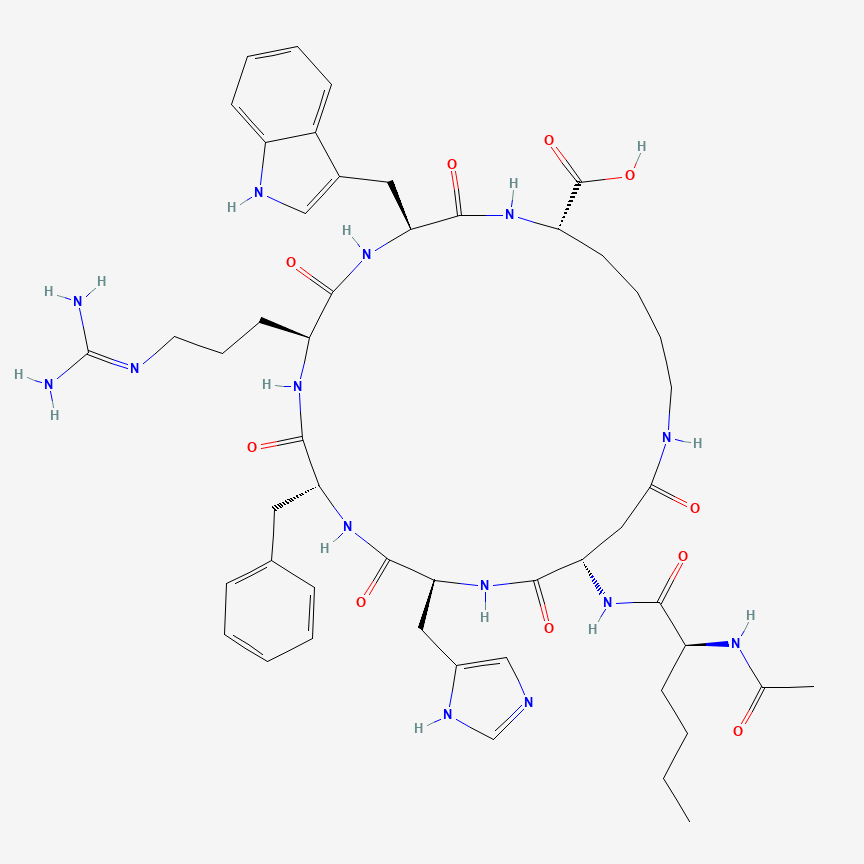
Derived from Melanotan II Analogue
PT-141 (Bremelanotide) was developed from Melanotan II through selective structural modifications that enhance receptor targeting while minimizing activity related to pigmentation. It differs by focusing on central melanocortin receptors rather than peripheral ones.
The peptide’s sequence, Ac-Nle-Asp(1)-His-D-Phe-Arg-Trp-Lys(1)-OH, gives it strong receptor affinity and molecular stability. These refinements created a second-generation analog optimized for controlled studies on neural signaling, receptor selectivity, and behavioral modulation.
Research-Grade Purity and Formulation
PT-141’s purity is verified through high-performance liquid chromatography (HPLC) and mass spectrometry. These methods confirm molecular identity and the absence of impurities. As a research-grade peptide, PT-141 meets strict analytical standards to ensure reliability in experimental use.
Consistent formulation supports reproducibility across trials. Its solubility and compatibility with common solvents enhance laboratory flexibility. Lyophilization helps maintain long-term stability, preserving molecular integrity and structural accuracy during storage and handling under controlled conditions.
PT-141 Research Applications
PT-141 is widely examined for its influence on central melanocortin pathways and behavioral signaling. Studies focus on areas such as sexual arousal, hypoactive sexual desire disorder, libido regulation, sexual performance, sexual intercourse, and related aspects of sexual health under controlled laboratory settings.
Additional research explores its effects on vascular tone, infection resistance, and neural activity. These investigations aim to clarify PT-141’s molecular roles in controlled laboratory environments.
Sexual Arousal, Hypoactive Sexual Desire Disorder, and Libido Studies
PT-141 has been studied for its effect on sexual desire and arousal pathways within the brain. Research on hypoactive sexual desire disorder (HSDD), female sexual dysfunction, and erectile dysfunction has examined how PT-141’s interaction with central melanocortin receptors may influence neural signaling related to sexual motivation.
Research shows that PT-141, when administered to male subjects with or without erectile dysfunction, produced dose-dependent responses related to male sexual dysfunction. [4] Studies in women focus on sexual desire outcomes and do not directly compare results between male and female participants. [5]
Scientists continue to analyze how PT-141 affects neurotransmitters and behavioral patterns to better understand the neurobiology behind sexual desire and response.
Research on Vascular and Circulatory Effects
PT-141 has also been evaluated for its influence on blood flow and vascular tone. Unlike peptides that act as direct vasodilators, it affects circulation through central receptor activity rather than peripheral mechanisms.
Researchers monitor cardiovascular markers such as blood pressure — including systolic, diastolic, and cases involving high blood pressure or uncontrolled hypertension — along with heart rate and other indicators relevant to cardiovascular disease during these experiments. [6]
In some human clinical studies, researchers have also documented mild and transient injection site reactions as among the encountered effects during subcutaneous administration. These reactions, however, are reported as observed adverse events rather than consistent outcomes.
Findings suggest PT-141’s actions differ from compounds affecting nitric oxide pathways, helping researchers understand neurovascular signaling and its connection to central melanocortin receptor modulation. [7]
Investigations Into Infection Resistance
Under controlled conditions, PT-141 has been investigated for its potential influence on immune signaling pathways related to infection resistance. Its activity at melanocortin receptors appears to play a role in regulating inflammatory responses and cytokine balance. [8]
Researchers compare its structure to α-MSH peptides, which share similar immune-related properties. [9] These findings support ongoing exploration of PT-141’s connection to neuroimmune communication, helping scientists study how peptide signaling contributes to host defense and molecular immune regulation.
PT-141 and Potential Anti-Tumor Properties
Researchers have examined PT-141 for its connection to melanocortin receptor pathways that may influence tumor growth and suppression. [10] Its similarity to α-MSH analogs makes it useful in studies focused on cell regulation and signaling balance.
Investigations show interactions with MC1R and MC4R that could affect cellular communication. These findings help clarify how receptor-specific modulation contributes to peptide-based studies on inflammation, apoptosis, and tumor-related cellular responses in controlled laboratory environments.
Central Nervous System Pathways and Behavioral Studies
PT-141 has also been observed to interact with melanocortin receptors in the central nervous system, influencing motivation, behavior, and emotional regulation. Research explores how it affects neural circuits tied to reward, stress, and social interaction.
Scientists examine its influence on dopamine and hypothalamic activity to understand how peptide signaling shapes neurochemical balance. [11] These findings provide insight into connections between neuroendocrine function, behavior, and mood regulation, helping define PT-141’s role in controlled studies of central melanocortin pathways.
Ongoing Research and Future Directions
PT-141 continues to gain attention in studies exploring neuroendocrine signaling, mood regulation, and energy balance. Researchers are investigating how it influences communication between hormonal and neural systems.
Future work aims to expand knowledge of PT-141’s involvement in sexual dysfunction and its potential role in ongoing studies exploring increased sexual desire. It focuses on receptor mapping, molecular signaling, and the complex interactions that shape behavioral, physiological, and sexual responses.
Researchers also note the possibility of evaluation in future clinical trials. Experts in sexual medicine continue to examine PT-141 to understand how central and hormonal signaling interact in cases of sexual dysfunction.
PT-141 in Neuroendocrine Function Studies
Scientists are studying how PT-141 affects neuroendocrine signaling and hormone regulation. It appears to influence communication between the hypothalamus and pituitary gland, two major centers of hormonal control.
Experiments also examine how PT-141 impacts neuropeptide release, stress-related pathways, and cortisol activity. These findings help clarify how peptide signaling contributes to hormonal balance and guide future research into receptor-targeted peptide design and endocrine system modulation.
Exploration of Mood and Energy Pathways
Researchers are examining how PT-141 influences brain regions tied to mood regulation, motivation, and energy balance. It interacts with melanocortin receptors that help control behavioral drive and metabolic activity.
Studies show it may affect neurotransmitters involved in stress adaptation and alertness. These insights help scientists better understand how central melanocortin signaling links emotional response, fatigue, and energy expenditure within controlled neurochemical research environments.
Sexual Dysfunction in Future PT-141 Research
Future studies aim to clarify how PT-141 helps researchers understand the neurological causes of sexual dysfunction. Scientists are mapping melanocortin receptor modulation to explore hormonal and signaling imbalances linked to low sexual desire.
Upcoming investigations also plan to examine these mechanisms in premenopausal women, focusing on the central and hormonal pathways involved in sexual dysfunction. Advancing analytical technology may refine receptor mapping and improve insight into the molecular mechanisms behind sexual dysfunction in controlled research settings.
Laboratory Verification and Testing
PT-141 undergoes strict verification before being released for research use. Each batch is tested for purity, identity, and molecular accuracy. Analytical validation confirms compliance with research-grade standards.
Certificates of Analysis and independent testing ensure transparency and reproducibility. These measures maintain consistency, confirming PT-141’s reliability and integrity for laboratory applications and controlled experimental environments.
Certificate of Analysis (COA)
A Certificate of Analysis (COA) for PT-141 includes details such as peptide identity, purity percentage, and batch number. It verifies results from analytical tests like chromatography and spectrometry. Each batch undergoes third-party validation to confirm molecular integrity and the absence of contaminants.
Peptides Online provides traceable COAs that align with laboratory compliance, helping researchers confirm accuracy, reproducibility, and consistency in every PT-141 experiment conducted under controlled conditions.
Purity and Identity Verification
PT-141’s purity is confirmed through high-performance liquid chromatography (HPLC) and mass spectrometry (MS). These methods verify molecular fingerprinting to match the peptide’s reference sequence and expected weight.
Independent labs test for ≥99% purity to ensure accuracy in experiments. Impurity profiling and peptide mapping confirm reliability across batches. Researchers who buy PT-141 rely on these standards to maintain scientific precision and experimental consistency in laboratory studies.
Product Handling and Storage
Proper handling and storage are essential for maintaining PT-141’s molecular stability. The lyophilized peptide should be stored in a cool, dry environment away from light and moisture. After reconstitution, refrigeration helps preserve structure and solubility.
Researchers typically use sterile water or compatible buffers for dilution. Avoid repeated freeze–thaw cycles, as they may degrade the peptide. Secure sealing and consistent temperature control extend PT-141’s shelf life and protect experimental integrity.
Disclaimer: For Research Use Only – Not for Human Consumption
PT-141 (10mg) is intended strictly for laboratory research purposes. It is not approved for human, veterinary, or diagnostic use. Only qualified professionals should handle and store this peptide in controlled research environments following proper safety protocols. All information provided here is for scientific and educational reference only. It should not be taken as medical, therapeutic, or legal advice. This content supports transparency, accuracy, and responsible research use of PT-141 (10mg).
References and Supporting Studies
-
Pfaus, J. G., Sadiq, A., Spana, C., & Clayton, A. H. (2022). The neurobiology of bremelanotide for the treatment of hypoactive sexual desire disorder in premenopausal women. CNS Spectrums, 27(3), 281–289. PubMed
-
Molinoff, P. B., Shadiack, A. M., Earle, D., Diamond, L. E., & Quon, C. Y. (2003). PT-141: a melanocortin agonist for the treatment of sexual dysfunction. Annals of the New York Academy of Sciences, 994, 96–102. PubMed
-
Heaton, J. P. W., Morales, A., & Adams, M. A. (2004). Melanocortins in sexual function. Current Sexual Health Reports, 1(2), 83–86. DOI:10.1007/s11930-004-0021-4. Springer
-
Diamond, L. E., Earle, D. C., Rosen, R. C., Willett, M. S., & Molinoff, P. B. (2004). Double-blind, placebo-controlled evaluation of the safety, pharmacokinetic properties and pharmacodynamic effects of intranasal PT-141, a melanocortin receptor agonist, in healthy males and patients with mild-to-moderate erectile dysfunction. International Journal of Impotence Research, 16(1), 51–59. PubMed
-
Kingsberg, S. A., Clayton, A. H., Portman, D., Williams, L. A., Krop, J., Jordan, R., Lucas, J., & Simon, J. A. (2019). Bremelanotide for the treatment of hypoactive sexual desire disorder: Two randomized phase 3 trials. Obstetrics & Gynecology, 134(5), 899–908. PMC
-
White, W. B., Myers, M. G., Jordan, R., & Lucas, J. (2017). Usefulness of ambulatory blood pressure monitoring to assess the melanocortin receptor agonist bremelanotide. Journal of Hypertension, 35(4), 761–768. PMC
-
King, S. H., Mayorov, A. V., Balse-Srinivasan, P., Hruby, V. J., Vanderah, T. W., & Wessells, H. (2007). Melanocortin receptors, melanotropic peptides and penile erection. Current Topics in Medicinal Chemistry, 7(11), 1098–1106. PMC
-
Taylor, A. W., Streilein, J. W., & Cousins, S. W. (2005). The immunomodulating neuropeptide alpha-melanocyte-stimulating hormone (alpha-MSH) suppresses LPS-stimulated TLR4 with IRAK-M in macrophages. Journal of Neuroimmunology, 162(1-2), 43–50. PMC
-
Dodd, J., Jordan, R., Makhlina, M., Barnett, K., Roffel, A., Spana, C., Obr, A., Dhingra, P., & Kayne, P. S. (2023). A novel oral formulation of the melanocortin-1 receptor agonist PL8177 resolves inflammation in preclinical studies of inflammatory bowel disease and is gut restricted in rats, dogs, and humans. Frontiers in Immunology, 14. FrontiersIn
-
Rosenkranz, A. A., Slastnikova, T. A., Durymanov, M. O., & Sobolev, A. S. (2013). Malignant melanoma and melanocortin 1 receptor. Biochemistry (Moscow), 78(11), 1228–1237. PMC
-
Pfaus, J. (2007). Bremelanotide: An overview of preclinical CNS effects on female sexual function. The Journal of Sexual Medicine, 4 (Suppl 4), 269–279. ScienceDirect