


Melanotan 2 (MT-2) 10mg
Melanotan 2 was first synthesized at the University of Arizona as a synthetic analog of the alpha-melanocyte-stimulating hormone (α-MSH). Researchers designed it to study how peptides influence skin pigmentation and ultraviolet (UV) response. Under controlled conditions, this compound binds to melanocortin receptors involved in regulating pigmentation, metabolism, and sexual behavior.
The peptide’s structure is routinely analyzed to clarify how synthetic peptides imitate natural biological processes. Scientific studies continue to examine Melanotan 2 for receptor selectivity, stability, and signaling effects, providing deeper insight into peptide research and its expanding experimental applications.
Overview of Melanotan 2
What is Melanotan 2? It is a synthetic analog of alpha-melanocyte-stimulating hormone (α-MSH), closely related to Melanotan I, another synthetic version of this peptide. [1] Both have been examined for their roles in skin pigmentation and energy balance. Researchers study Melanotan 2 for its interaction with melanocortin receptors, which are known to influence melanin production, appetite, and sexual function.
In laboratory studies, the peptide exhibits strong receptor activity that provides insight into how melanocortin signaling governs pigmentation and neurochemical regulation. Its structural design enables controlled analysis of receptor binding and signal transduction. This allows scientists to explore how peptide analogs replicate biological mechanisms with precision and stability under experimental conditions.
Molecular Composition and Peptide Details
The Melanotan 2 peptide is a stable cyclic analog of α-MSH with unique molecular properties suited for research. It has been studied for its receptor activity and peptide stability.
-
Peptide Sequence: Ac-Nle-c[Asp-His-D-Phe-Arg-Trp-Lys]-NH₂
-
Molecular Formula: C₅₀H₆₉N₁₅O₉
-
Molecular Weight: 1025.2 g/mol
-
CAS Number: 121062-08-6
-
PubChem CID: 92432
-
Synonyms: MT-2, Melanotan II, Melanocortin receptor agonist, superpotent cyclic melanotropic peptide
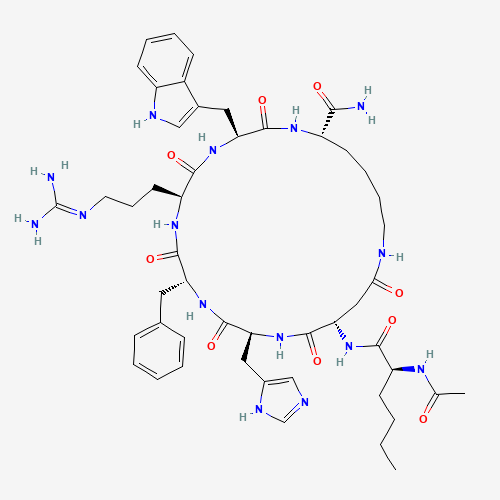
Chemical Structure and Formula
Melanotan 2 peptides share structural similarities with the natural α-melanocyte-stimulating hormone (α-MSH). The peptide sequence forms a cyclic structure that increases stability and receptor binding efficiency. Its amino acid arrangement—Ac-Nle-c[Asp-His-D-Phe-Arg-Trp-Lys]-NH₂—creates a compact framework that is resistant to enzymatic breakdown.
This design allows researchers to observe prolonged receptor interaction. The molecular formula C₅₀H₆₉N₁₅O₉ reflects its dense composition, supporting its classification as a well-characterized synthetic melanocortin receptor agonist used in peptide research.
Lyophilized Form and Research Purity
Melanotan 2 is supplied as a lyophilized (freeze-dried) powder to maintain molecular stability during transport and storage. Each batch undergoes analytical testing to confirm purity, identity, and composition before distribution, ensuring research-grade consistency. The peptide’s freeze-dried form preserves its structure and activity.
Quality verification includes advanced chromatographic and spectrometric methods. Every vial demonstrates reliable consistency and meets strict laboratory standards for research-grade peptides used in experimental peptide science.
Melanotan 2 Research Applications
Melanotan 2 is widely studied for its interaction with melanocortin receptors that influence pigmentation, metabolism, and neurochemical signaling. Research also examines its potential to increase sexual arousal through receptor pathways associated with erectile function, alongside studies on α-MSH signaling, increased skin pigmentation, social behavior, appetite control, and glucose metabolism.
Under controlled conditions, these studies help scientists understand how receptor agonists like Melanotan 2 contribute to biochemical regulation across neurological, metabolic, and endocrine research models.
Alpha Melanocyte Stimulating Hormone and Melanocortin Receptor Signaling Studies
Melanotan 2 functions as a synthetic analog of alpha-melanocyte-stimulating hormone (α-MSH), binding to melanocortin receptors MC1R through MC5R. [2] In laboratory studies, it activates signaling cascades that increase cyclic AMP (cAMP) production and stimulate pigment-related transcription under UV exposure. Enhanced melanogenesis and eumelanin synthesis are observed when MT-2 interacts with MC1R.
Compared with α-MSH, Melanotan 2 demonstrates stronger molecular stability and receptor affinity. Researchers also investigate its cross-activity with MC3R and MC4R [3] to explore connections between pigmentation, energy balance, sexual desire, and neuroendocrine regulation, reinforcing its role as a synthetic tanning agent in experimental research.
Studies on Social and Behavioral Modulation (Autism Models)
Melanotan 2 has been examined for its role in central melanocortin pathways that affect social and emotional behavior. In laboratory studies, researchers found that MT-2 influences oxytocin release and vasopressin systems within the central nervous system, linked to social communication and recognition processes. [4]
Experiments using animal models of autism observed changes in sociability, emotional regulation, and repetitive behaviors. MT-2’s activation of melanocortin receptors in the hypothalamus and amygdala may explain these responses. Current studies continue exploring its value in understanding the neurochemical basis of social behavior.
Research on Appetite and Metabolic Function
Melanotan 2 has been studied for its influence on appetite regulation through central melanocortin receptor activation. In controlled experiments, MT-2 reduced food intake and increased satiety signaling in research animals. [5] Observations include changes in energy expenditure and fat metabolism, providing data relevant to metabolic balance research. Related findings have been featured in international journal research on energy homeostasis and appetite regulation.
Its activity within hypothalamic pathways contributes to appetite suppression and energy homeostasis. Comparative studies with other receptor agonists highlight MT-2’s potency and stability in experimental models focused on weight regulation and metabolic control. [6]
Investigations in Glucose Regulation and Diabetes
Melanotan 2 has been examined for its effects on glucose metabolism and insulin sensitivity in preclinical research. Studies show that MT-2 activates melanocortin receptors in metabolic tissues, influencing glucose uptake and insulin response. In laboratory conditions, MT-2 reduced hepatic glucose production and improved glucose tolerance. [7]
Its interaction with hypothalamic pathways supports balanced energy and glucose regulation. Researchers compare MT-2 with other receptor agonists to evaluate its stability and receptor efficiency in experimental models of insulin signaling and metabolic control.
Melanotan 2 and Reward Pathways (Impulse Control, Alcohol Use)
Melanotan 2 has also been studied for its effect on brain reward circuits related to impulse control and addictive behavior. In research settings, MT-2 influenced dopaminergic signaling within the mesolimbic pathway, particularly in the nucleus accumbens. These changes affected dopamine release and reward-driven motivation.
Laboratory findings show reduced compulsive and alcohol-seeking behaviors in animal models. MT-2’s activation of MC3R and MC4R appears central to these outcomes. [8] Ongoing studies and pre-clinical trials explore how this peptide helps researchers understand reinforcement, impulsivity, and motivation at the neurochemical level.
MT-2 and Erectile Dysfunction Research
Research has also explored Melanotan 2's potential effects on erectile response through central melanocortin receptor activation, particularly MC3R and MC4R, as melanocortin regulates sexual functions. Under controlled conditions, MT-2 triggered penile erection independent of peripheral vascular mechanisms. [9] Studies observed increased sexual arousal and motivation, along with libido-linked neurochemical activity in experimental models.
Researchers found dose-dependent effects on erection frequency and duration. MT-2’s interaction with hypothalamic neurons plays a key role in these outcomes. Comparative studies evaluate how this peptide differs from other melanocortin agonists studied in sexual behavior research.
Ongoing and Emerging MT-2 Studies
Current research continues to expand the understanding of Melanotan 2’s influence on neurological and metabolic systems. Scientists are investigating its role in neuroprotection, central melanocortin signaling, increased libido, and stress response mechanisms. [10] New studies examine how MT-2 affects pigmentation control and photoprotective processes at the cellular level, including research on UV-induced DNA damage linked to skin cancer development.
Researchers also explore its effects on metabolic balance, inflammatory signaling, oxidative pathways, and systemic toxicity, along with its potential to increase melanin production under sun exposure and UV-related cellular stress models. [11] Emerging interest focuses on developing MT-2 analogs with improved receptor selectivity and stability. These studies aim to enhance precision in peptide-based research while expanding the understanding of melanocortin-related biological systems.
Product Quality and Verification
Each Melanotan 2 batch undergoes strict laboratory testing to confirm identity, purity, and molecular stability. Analytical documentation, including a Certificate of Analysis (COA), provides verified results for each lot. Testing ensures reliability for scientific research, confirming that every vial meets professional standards for peptide quality, consistency, and reproducibility in controlled experimental environments.
Analytical Testing and Purity Certification
High-performance liquid chromatography (HPLC) measures Melanotan 2 purity by separating and quantifying each component. Mass spectrometry (MS) confirms molecular weight and verifies the amino acid sequence. These methods detect impurities and degradation byproducts.
Replicate testing and calibration standards maintain analytical precision across batches. Retention time analysis supports stability tracking. Together, HPLC and MS testing ensure molecular reliability, structural consistency, and verified purity for every Melanotan 2 sample distributed for research purposes.
Certificate of Analysis (COA)
Each Melanotan 2 batch includes a Certificate of Analysis (COA) that confirms analytical test results and product integrity. The COA lists purity percentage, molecular weight verification, and testing methods used. Independent laboratory validation ensures transparency and traceability.
This documentation supports scientific confidence by confirming the peptide’s identity and consistency. COA data undergo review and approval before product release, ensuring analytical accuracy and batch reliability for all Melanotan 2 research-grade materials.
Product Handling and Storage
Proper storage is essential to maintain the stability of Melanotan 2. This peptide must be stored in a cool, dry environment away from direct sunlight, heat, and moisture. These factors can degrade its molecular structure and affect research accuracy.
Short-term storage works best under refrigeration, while long-term preservation requires freezing. Temperature fluctuations should be minimized, and repeated freeze–thaw cycles avoided. Airtight, light-protected containers help maintain purity and stability. Researchers who buy Melanotan 2 follow these guidelines to preserve peptide integrity.
Research Use Disclaimer
Melanotan 2 is intended strictly for laboratory research purposes. It is not approved for human, veterinary, or diagnostic use. This product must be handled and stored in controlled research environments under qualified supervision. All information provided is for scientific and educational reference. It must not be interpreted as medical, therapeutic, or legal advice. Always follow institutional safety standards and compliance requirements when working with research-grade peptides.
References and Citations
-
Mun, Y., Kim, W., & Shin, D. (2023). Melanocortin 1 Receptor (MC1R): Pharmacological and Therapeutic Aspects. International Journal of Molecular Sciences, 24(15), 12152. PMC
-
Cai, M., & Hruby, V. J. (2016). The melanocortin receptor system: A target for multiple degenerative diseases. Current Protein & Peptide Science, 17(5), 488–496. PMC
-
Yuan, X. C., & Tao, Y. X. (2022). Ligands for melanocortin receptors: Beyond melanocyte-stimulating hormones and adrenocorticotropin. Biomolecules, 12(10), 1407. PMC
-
Minakova, E., Lang, J., Medel-Matus, J.-S., Gould, G. G., Reynolds, A., Shin, D., Mazarati, A., & Sankar, R. (2019). Melanotan-II reverses autistic features in a maternal immune activation mouse model of autism. PLOS ONE, 14(1), e0210389. ResearchGate
-
Côté, I., Sakarya, Y., Kirichenko, N., Morgan, D., Carter, C. S., Tümer, N., & Scarpace, P. J. (2016). Activation of the central melanocortin system chronically reduces body mass without the necessity of long-term caloric restriction. Canadian Journal of Physiology and Pharmacology, 95(2), 206–214. PMC
-
Eliason, N. L., Martin, L., Low, M. J., & Sharpe, A. (2022). Melanocortin receptor agonist melanotan-II microinjected in the nucleus accumbens decreases appetitive and consumptive responding for food. Neuropeptides, 96, 102289. PMC
-
Heijboer, A. C., van den Hoek, A. M., Pijl, H., Voshol, P. J., Havekes, L. M., Romijn, J. A., & Corssmit, E. P. M. (2005). Intracerebroventricular administration of melanotan II increases insulin sensitivity of glucose disposal in mice. Diabetologia, 48(8), 1621–1626. PubMed
-
Olney, J. J., Sprow, G. M., Navarro, M., & Thiele, T. E. (2014). The protective effects of the melanocortin receptor (MCR) agonist, melanotan-II (MTII), against binge-like ethanol drinking are facilitated by deletion of the MC3 receptor in mice. Neuropeptides, 48(1), 47–51. PMC
-
Wessells, H., Levine, N., Hadley, M. E., Dorr, R., & Hruby, V. J. (2000). Melanocortin receptor agonists, penile erection, and sexual motivation: human studies with Melanotan II. International Journal of Impotence Research, 12(Suppl 4), S74–S79. PubMed
-
ScienceDirect Topics. (n.d.). Melanotan II – an overview. ScienceDirect
-
Nelson, M. E., Bryant, S. M., & Aks, S. E. (2012). Melanotan II injection resulting in systemic toxicity and rhabdomyolysis. Clinical Toxicology (Philadelphia), 50(10), 1169–1173. PubMed