


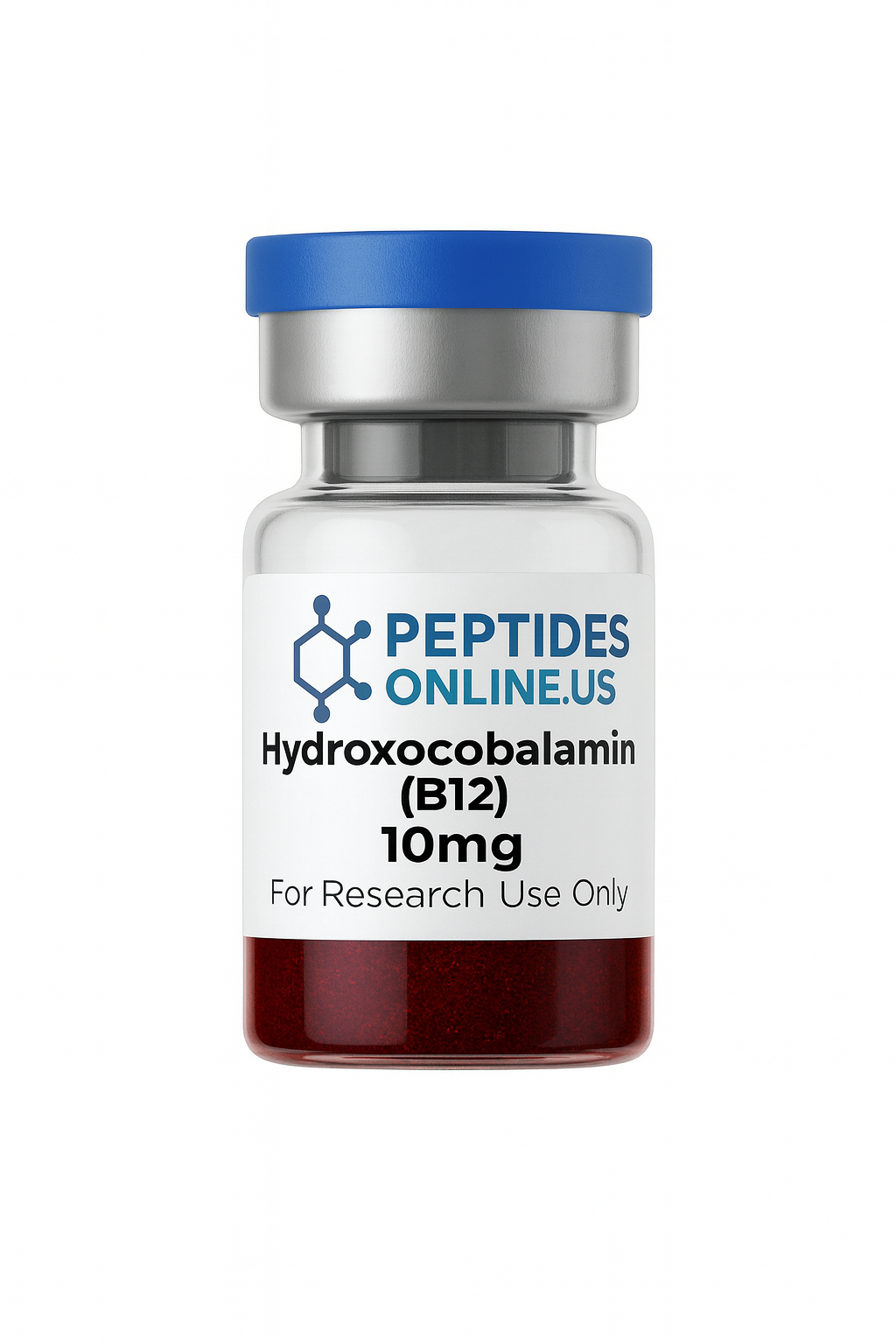
Hydroxocobalamin (Vitamin B12) – 10mg
When scientists first isolated hydroxocobalamin in the 1940s, they were researching pernicious anemia, not realizing they had identified one of the most stable and active forms of Vitamin B12. Today, it is recognized for its importance in metabolic studies and cyanide detoxification research. This biologically active compound supports cellular metabolism, DNA synthesis, and the production of red blood cells.
Researchers value hydroxocobalamin for its longer retention time compared to other B12 forms and its ability to bind cyanide and nitric oxide. These features make it a key molecule in studies focused on mitochondrial activity, energy balance, and cellular function.
What Is Hydroxocobalamin? [Overview]
What is hydroxocobalamin? It is a naturally occurring form of Vitamin B12 and a cobalt-based compound classified as a cobalamin. Scientists first identified it in the mid-20th century while studying anemia-related deficiencies, the most common cause of vitamin B12 deficiency at the time. It appears as a deep red, water-soluble crystalline solid, easily recognized by its color and molecular stability.
Hydroxocobalamin's high purity and natural ability to convert into biologically active B12 forms make it a preferred compound for laboratory use. Supplied in 10 mg vials for controlled research, it remains an essential standard in studies on metabolism, cellular energy, and biochemical reactions.
Primary Uses and Applications
Hydroxocobalamin B12 is primarily studied for its involvement in vitamin B12 metabolism and its role in enzyme-driven biochemical pathways. Unlike some vitamin B12 forms available over the counter, hydroxocobalamin is mainly used in controlled experiments to examine red blood cell formation, DNA synthesis, and nervous system function.
It is also valuable in detoxification studies, where it binds cyanide to form cyanocobalamin. [1] Scientists apply hydroxocobalamin in metabolic and mitochondrial research to model energy conversion and cellular processes.
Some studies also explore its link to nervous system activity and neurological symptoms observed in vitamin B12 deficiency. Its high purity, stability, and reproducible results make it a preferred compound for biochemical assays and in vitro studies worldwide.
How Hydroxocobalamin Works in the Body
How does hydroxocobalamin work? Hydroxocobalamin acts as a precursor to the active coenzyme forms of vitamin B12—methylcobalamin and adenosylcobalamin—which are essential in biochemical studies of cellular metabolism.
In biological systems, these coenzymes function as cofactors for the enzymes methionine synthase and methylmalonyl-CoA mutase, [2] both of which play important roles in DNA synthesis, red blood cell formation, nerve function, and energy-related metabolic reactions.
The central cobalt ion in hydroxocobalamin allows it to form stable coordination bonds, a property frequently investigated in metal–ligand and protein-binding research [3]. In circulation models, hydroxocobalamin binds strongly to transcobalamin II, the transport protein responsible for delivering cobalamin derivatives to cells.
Ongoing studies also examine how hydroxocobalamin may influence oxidative balance and mitochondrial activity under experimental conditions [4]. These findings help clarify its biochemical behavior without implying any therapeutic or clinical effect.
General Product Information
Peptides Online supplies Hydroxocobalamin (Vitamin B12) – 10mg as a lyophilized red crystalline powder intended for research use only. This cobalt-based cobalamin meets strict laboratory-grade purity standards and is verified for identity and stability. Each vial is sterile-sealed and clearly labeled for full traceability.
Qualified researchers typically reconstitute the compound using bacteriostatic water or another suitable solvent. Laboratories may reference hydroxocobalamin injection data in biochemical, metabolic, and toxicology studies to compare absorption and retention characteristics.
Mechanism of Action and Biological Role
Hydroxocobalamin is studied for its vital role in cellular metabolism, red blood cell formation, and energy production. It serves as a precursor to active vitamin B coenzymes, helping enzymes regulate methylation and metabolic balance. Compared with cyanocobalamin and methylcobalamin, it offers greater stability and stronger binding properties, making it valuable for research on detoxification and cellular health.
Role in Red Blood Cell Formation and Energy Metabolism
Hydroxocobalamin functions as a precursor to the active coenzymes methylcobalamin and adenosylcobalamin, which serve as cofactors in essential metabolic reactions such as DNA synthesis, amino acid conversion, and fatty acid metabolism.
These coenzyme forms are involved in processes that support red blood cell formation during erythropoiesis, a key focus in hematologic and metabolic research on vitamin B12 deficiency. Such deficiencies are most often observed in individuals with limited intake of animal products, the main natural dietary sources of vitamin B12. [5]
In mitochondrial studies, it has been observed to help process fatty acids and amino acids involved in energy metabolism. Researchers also examine its influence on methionine and folate cycles, linking it to energy balance and cellular oxygen transport. All studies are conducted under controlled conditions for accurate biochemical interpretation.
Comparison With Other B12 Forms (Cyanocobalamin, Methylcobalamin)
Hydroxocobalamin differs from other Vitamin B12 forms through its strong binding properties and long retention time in tissues. Compared with cyanocobalamin, it attaches more tightly to plasma proteins and converts more efficiently into active coenzymes. [6] Methylcobalamin works directly in methylation reactions, while hydroxocobalamin functions as a reservoir that the body can convert as needed.
Researchers are particularly impressed by hydroxocobalamin stability and transport efficiency, especially its high affinity for transcobalamin II. These distinctions make hydroxocobalamin a preferred compound for biochemical, metabolic, and pharmacokinetic research.
Potential Use of Hydroxocobalamin Injection in Detoxification and Cellular Health
Hydroxocobalamin has a strong ability to bind cyanide ions, forming cyanocobalamin, a stable compound that can be safely removed from the system in controlled studies. Researchers study this reaction to understand how the compound helps detoxify cyanide, providing valuable insight into detoxification mechanisms, cyanide toxicity, and the processes involved in cyanide poisoning.
Its molecular structure also allows it to interact with free radicals and nitric oxide, making it useful in studies on oxidative stress and cellular protection. Scientists explore how it influences mitochondrial function and energy production, focusing on its role in maintaining redox balance and cellular resilience under experimental conditions.
Product Composition and Research Details
Hydroxocobalamin (Vitamin B12) – 10mg has a defined molecular structure and consistent research-grade composition. It serves as a stable cobalamin compound for use in biochemical and metabolic experiments.
Researchers study its structure, solubility, and binding behavior to understand vitamin B12 pathways. Supplied for controlled laboratory use, it provides reliable performance in various experimental and analytical applications.
Molecular Formula and Characteristics
Hydroxocobalamin is a biologically active form of vitamin B₁₂ characterized by a central cobalt ion bound within a corrin ring. It is widely used in research to study cobalamin metabolism, enzyme cofactor functions, and redox biochemistry.
-
Peptide Sequence: N/A (Not a peptide)
-
Molecular Formula: C₆₂H₈₉CoN₁₃O₁₅P
-
Molecular Weight: 1346.37 g/mol
-
CAS Number: 13422-51-0
-
PubChem CID: 44475014
-
Synonyms: Cyanokit, Hydroxomin, AlphaRedisol, alpha Cobione
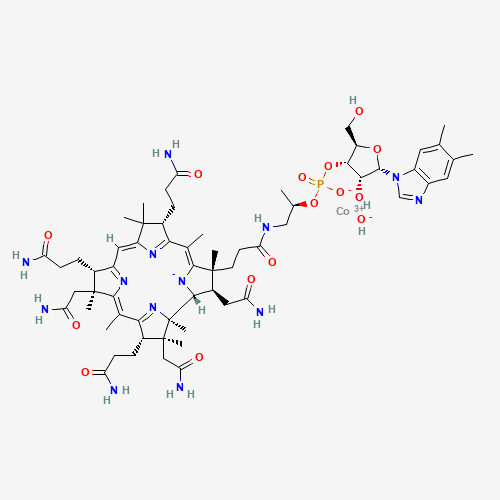
Its purity and identity are typically verified through high-performance liquid chromatography (HPLC), UV–Vis spectrophotometry, and mass spectrometry, [7] techniques routinely used for analytical confirmation of cobalamins.
Research and Laboratory Use
Hydroxocobalamin (Vitamin B12) – 10mg is supplied strictly for laboratory and in vitro research, not for human or veterinary use. Researchers study it to understand vitamin B12 metabolism, enzyme function, and cellular methylation under controlled conditions.
It is also used in toxicology studies exploring its ability to bind cyanide and reactive molecules. Scientists employ it in metabolic, hematologic, and mitochondrial research to model energy conversion and red blood cell synthesis. All experiments are conducted by qualified professionals following laboratory safety and handling protocols.
Pros and Cons of Hydroxocobalamin
Hydroxocobalamin is highly regarded for its reliability in laboratory and biochemical research, though researchers recognize both advantages and limitations depending on study requirements.
Pros
This compound exhibits a strong binding affinity to cyanide and nitric oxide, making it ideal for detoxification and toxicology research. Its stability, high purity, and long retention time ensure consistent performance in metabolic and pharmacokinetic studies. As a precursor to active B12 coenzymes, it enables exploration of methylation, energy metabolism, and cellular repair mechanisms.
Cons
Hydroxocobalamin requires light protection and cool storage, adding extra handling steps. While versatile, it may not suit studies requiring direct coenzyme action, such as those focused specifically on methylcobalamin-driven enzymatic pathways.
Handling, Dosage, and Storage Guidelines
Hydroxocobalamin (Vitamin B12) – 10mg is supplied as a lyophilized powder and must be handled in a controlled laboratory environment using aseptic techniques. Qualified personnel should wear protective gloves and lab coats to maintain purity and prevent contamination.
Store the unopened vial at 2–8°C in a cool, dry place, away from light. Once reconstituted, refrigerate and use within the recommended time frame. Avoid repeated freeze-thaw cycles, as they may degrade the compound and affect experimental accuracy over time.
Handling Information and Suggested Usage Notes
Hydroxocobalamin (Vitamin B12) – 10mg is intended strictly for laboratory and in vitro research, not for human or veterinary use. All handling must occur in a controlled environment under aseptic conditions. Researchers should wear protective clothing, including gloves and eyewear, to preserve product integrity.
The lyophilized powder may be reconstituted with sterile or bacteriostatic water, depending on research needs. Record batch numbers, preparation dates, and storage details for traceability. Protect the compound from light exposure and avoid repeated freeze-thaw cycles to maintain stability and purity.
Clinical Insights and Pharmacological Data
Hydroxocobalamin has been widely studied for its absorption, retention, and detoxification properties, distinguishing it from other Vitamin B12 forms.
Pharmacokinetics and Absorption
Research shows that hydroxocobalamin binds strongly to transcobalamin II, improving cellular uptake and transport efficiency. It demonstrates slower clearance and superior tissue retention compared to cyanocobalamin, maintaining B12 levels longer in biological systems. These characteristics make it valuable in pharmacokinetic modeling and metabolic conversion studies.
Duration of Activity in the Body
In pharmacokinetic models, hydroxocobalamin demonstrates a longer duration in circulation, serving as a stable B12 reservoir in biochemical investigations. Its extended half-life supports experiments that assess sustained vitamin availability and long-term cellular metabolism.
Related Studies and Research Findings:
-
A study of high-dose hydroxocobalamin in septic shock showed lower vasopressor requirements and reduced H₂S levels, supporting its feasibility in acute systemic stress. [8]
-
In patients with CblC deficiency, dose escalation of hydroxocobalamin over 18–30 months led to improved homocysteine levels and neurological outcomes, under controlled monitoring. [9]
-
In a comparative trial of tobacco amblyopia, participants treated with hydroxocobalamin showed greater gains in visual acuity and color discrimination than those receiving cyanocobalamin. [10]
Side Effects and Safety Information
While hydroxocobalamin is well-tolerated in research settings, it can produce certain common side effects observed during controlled studies. These effects guide laboratory safety practices and awareness.
-
Common and Temporary Effects: Mild reactions may include skin redness, slight itching, or a temporary rash at the site of exposure. A reddish tint in urine sometimes occurs due to the compound’s natural pigment. These effects are typically short-lived and resolve once exposure ends. However, if symptoms persist or worsen, seek medical attention in accordance with laboratory safety protocols.
-
Less Common or Serious Reactions: Some studies report allergic reactions such as dizziness, mild nausea, and temporary changes in blood pressure. Mild skin redness, swelling, or itching may also occur, but these reactions are typically short-lived and resolve under controlled conditions. Researchers should handle all materials according to strict laboratory protocols to ensure safe observation and minimize unwanted responses during experimentation.
Safety Profile and Tolerance
Hydroxocobalamin demonstrates a strong safety record supported by extensive laboratory and clinical research. Studies show it is highly tolerated, with minimal adverse effects when handled under proper conditions. Its water-soluble nature and chemical stability reduce the risk of buildup or degradation in experimental systems.
Researchers report predictable dose-response behavior, making it a reliable compound for pharmacokinetic and metabolic modeling. Its low toxicity and strong biocompatibility establish hydroxocobalamin as a trusted cobalamin derivative for vitamin B12 and detoxification research applications.
Risks, Interactions, and Considerations
Hydroxocobalamin is generally considered safe in research environments, but understanding its biochemical interactions and experimental considerations is important for accurate data interpretation.
-
Folate Deficiency and Treatment Response: Studies show that when folate deficiency coexists with low vitamin B12, results may appear delayed or incomplete. Both nutrients are linked to DNA synthesis and red blood cell formation, so researchers often monitor folate and cobalamin levels together in metabolic studies.
-
Possible Changes in Potassium or Blood Levels: Temporary drops in potassium have been observed during red blood cell production after B12 exposure. Monitoring electrolyte balance ensures consistent results in metabolic testing.
-
Known Interactions and Contraindications: Hydroxocobalamin may react with oxidizing or reducing agents, altering its structure or color, in experimental conditions. It can also interact with photoreactive reagents, requiring controlled light protection. Though rare, hypersensitivity reactions are documented, emphasizing proper risk assessment and safety compliance.
Quality and Testing Information
Each batch of Hydroxocobalamin (Vitamin B12) – 10mg undergoes strict quality testing before release to ensure purity, identity, and consistency. A detailed Certificate of Analysis (COA) accompanies every batch, confirming appearance, composition, and molecular structure. Analytical data include HPLC chromatograms, UV-Vis spectra, and mass spectrometry verification.
Peptides Online also tests for moisture content, residual solvents, and contaminants according to research-grade standards. All vials are traceable through documented batch control procedures, ensuring full transparency and reproducibility for laboratories conducting biochemical and toxicological research.
Disclaimer: Hydroxocobalamin (Vitamin B12) – 10mg is intended strictly for laboratory research purposes. It is not approved for human, veterinary, or diagnostic use. This compound must be handled only in controlled research environments by qualified professionals following proper safety protocols. All information provided here is for scientific and educational reference only. It should not be interpreted as medical, therapeutic, or legal advice. The content is presented to support accuracy, transparency, and the responsible research use of Hydroxocobalamin (Vitamin B12) – 10mg in accordance with established laboratory standards.
References and Supporting Studies
-
Hydroxocobalamin - an overview. (n.d.). In ScienceDirect Topics: Pharmacology, Toxicology and Pharmaceutical Science. ScienceDirect
-
Al Amin, A. S. M., & Gupta, V. (2023, July 16). Vitamin B12 (Cobalamin). In StatPearls [Internet]. Treasure Island (FL): StatPearls Publishing. NCBI
-
Takahashi-Iñiguez, T., García-Hernández, E., Arreguín-Espinosa, R., & Flores, M. E. (2012). Role of vitamin B12 on methylmalonyl-CoA mutase activity. Journal of Zhejiang University Science B, 13(6), 423–437. PMC
-
Hall, C. A., Begley, J. A., & Green-Colligan, P. D. (1984). The availability of therapeutic hydroxocobalamin to cells. Blood, 63(2), 335–341. PubMed
-
Rizzo, G., Laganà, A. S., Rapisarda, A. M., La Ferrera, G. M., Buscema, M., Rossetti, P., Nigro, A., Muscia, V., Valenti, G., Sapia, F., Sarpietro, G., Zigarelli, M., & Vitale, S. G. (2016). Vitamin B12 among vegetarians: Status, assessment and supplementation. Nutrients, 8(12), 767. PMC
-
Gonzalez-Rivas, P. A., Chambers, M., & Liu, J. (2021). A pilot study comparing the pharmacokinetics of injectable cyanocobalamin and hydroxocobalamin associated with a trace mineral injection in cattle. Journal of Veterinary Pharmacology and Therapeutics, 44(3), 406–410. PubMed
-
Owen, S. C., Lee, M., & Grissom, C. B. (2011). Ultra-performance liquid chromatographic separation and mass spectrometric quantitation of physiologic cobalamins. Journal of Chromatographic Science, 49(3), 228–233. ResearchGate
-
Patel, J. J., Willoughby, R., Peterson, J., Carver, T., Zelten, J., Markiewicz, A., Spiegelhoff, K., Hipp, L. A., Canales, B., Szabo, A., Heyland, D. K., Stoppe, C., Zielonka, J., & Freed, J. K. (2023). High-Dose IV Hydroxocobalamin (Vitamin B12) in Septic Shock: A Double-Blind, Allocation-Concealed, Placebo-Controlled Single-Center Pilot Randomized Controlled Trial (The IV-HOCSS Trial). Chest, 163(2), 303–312. ChestNet
-
Matos, I. V., Castejón, E., Meavilla, S., O’Callaghan, M., Garcia-Villoria, J., López-Sala, A., Ribes, A., Artuch, R., & Garcia-Cazorla, A. (2013). Clinical and biochemical outcome after hydroxocobalamin dose escalation in a series of patients with cobalamin C deficiency. Molecular Genetics and Metabolism, 109(4), 360–365. ScienceDirect
-
Chisholm, I. A., Bronte-Stewart, J., & Foulds, W. S. (1967). Hydroxocobalamin versus cyanocobalamin in the treatment of tobacco amblyopia. The Lancet, 2(7513), 450–451. ScienceDirect