


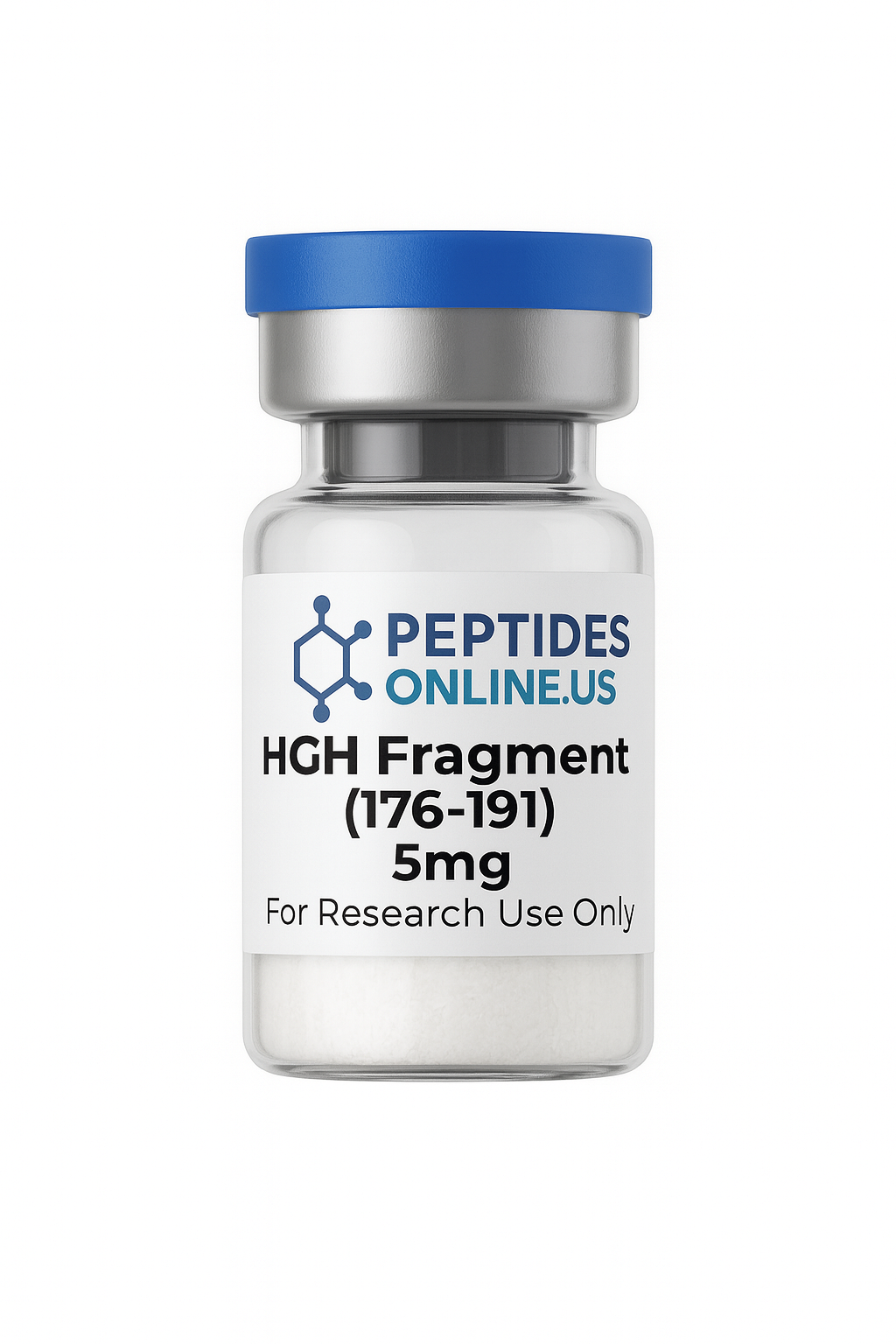
HGH Fragment 176-191 (GH FRAG 176-191) 6mg
HGH Frag 176-191 is a synthetic peptide taken from the C-terminal end of human growth hormone. Researchers first identified this sequence while studying how shorter peptide chains affect lipid metabolism. Early experiments indicated selective lipolytic activity without the broad growth-related responses seen in full-length HGH. [1]
Today, scientists continue to examine its molecular stability, sequence specificity, and performance across multiple assays. These factors make HGH Frag 176-191 a consistent and reliable reference compound in controlled peptide research.
What Is HGH Frag 176-191?
What is HGH Frag 176-191? It is a peptide segment identified in the late 1970s when scientists, including Summers RJ, studied the full sequence of human growth hormone. Researchers isolated this fragment to study how specific amino acid regions influence fat metabolism and peptide behavior. Laboratories now use it to study lipid breakdown and energy balance processes.
Peptides Online supplies HGH Fragment 176-191 (6 mg) in lyophilized form. It is synthesized from research-grade materials and verified through analytical testing. Each batch includes a Certificate of Analysis confirming purity, potency, and molecular identity.
How It Differs From Full-Length Human Growth Hormone
HGH Frag 176-191 peptide corresponds to a sequence at the C-terminal end of human growth hormone that spans amino acids 176–191, as described in published studies on growth hormone fragments. Researchers study this portion of the molecule because it demonstrates selective metabolic activity without the broad growth-related effects associated with full-length HGH.
In laboratory studies, it acts mainly on adipose tissue, influencing lipid metabolism rather than general anabolic processes. [2] Its shorter structure enhances solubility, stability, and ease of handling under research conditions. Scientists also report differences in receptor interaction, making HGH Frag 176-191 suitable for targeted metabolic and biochemical investigations.
Mechanism of Action and Function in Research
HGH Frag 176-191 peptides act as a lipolytic fragment, influencing cellular pathways that regulate lipid metabolism. They appear to promote fat breakdown by influencing enzymes responsible for lipolysis, including those associated with beta-oxidation. Researchers have found selective activity in adipose cells without stimulating growth-related mechanisms. [3]
Both in vitro and in vivo models suggest the peptide interacts with receptors involved in energy release and utilization. Studies also indicate dose-dependent responses, helping scientists map how this peptide affects metabolic efficiency and cellular energy regulation.
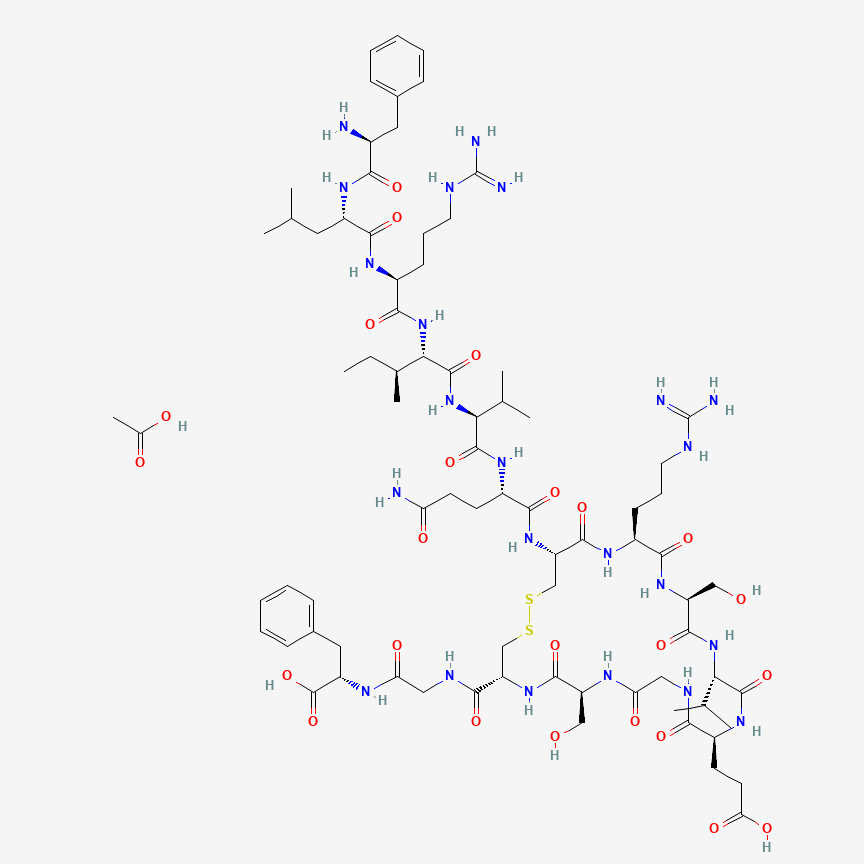
Molecular Structure and Composition
HGH Frag 176-191 is a short amino acid chain derived from the C-terminal end of human growth hormone (human GH). Its design allows researchers to study lipid metabolism and energy-regulating pathways with greater precision than full-length HGH.
-
Peptide Sequence: Tyr-Leu-Arg-Ile-Val-Gln-Cys-Arg-Ser-Val-Gly-Ser-Cys-Gly-Phe
-
Molecular Formula: C80H127N23O24S2
-
Molecular Weight: 1815.08 g/mol
-
CAS Number: 66004-57-7
-
PubChem CID: 172966176
-
Synonyms: HGH Fragment 176-191, GLXC-21568
-
Physical Characteristics: Appears as a white, lyophilized powder; soluble in sterile water or buffered solutions under laboratory conditions.
Lyophilized Form and Research Purity
HGH Fragment 176-191 is supplied in a lyophilized, or freeze-dried, form to preserve its structure and activity. This preparation protects the peptide from degradation and molecular destruction during delivery and storage. Sterile production methods prevent contamination and maintain consistency across batches.
Peptides Online confirms purity through analytical testing, including high-performance liquid chromatography (HPLC) and mass spectrometry (MS). These tests verify molecular identity and ≥99% research-grade purity. When reconstituted correctly, the peptide maintains stability and performance for use in controlled laboratory experiments.
Research Applications and Observed Effects
HGH Fragment 176-191 is widely studied for its influence on metabolic regulation, lipid breakdown, and cellular energy transformation. The presence of tyrosine at the start of its chain allows scientists to track peptide integrity and binding behavior during metabolic assays. Researchers use it to explore how specific peptide sequences affect fat metabolism, glucose response, and tissue repair.
Preclinical and clinical studies also examine its activity in energy balance and cellular signaling pathways, offering insight into mechanisms of lipid oxidation and metabolic efficiency. Findings were presented as part of ongoing peptide development and biochemical evaluation. These studies also provide valuable reference data for drug design and molecular development involving peptide fragments with selective metabolic properties.
Studies on Fat Metabolism and Weight Regulation
Research on HGH Fragment 176-191 focuses on its role in lipid metabolism and fat mobilization, establishing it as a leading compound in fat-metabolism research. [4] Laboratory studies in obese mice and other rodent models show enhanced triglyceride breakdown, fatty acid oxidation, and lipid destruction during chronic treatment periods. Scientists observe measurable changes in adipose tissue metabolism, potentially linked to improved lipid turnover.
In vitro and in vivo testing methods help evaluate metabolic outcomes. Ongoing research continues to assess how this peptide supports energy regulation and fat processing through specifically targeted biochemical pathways under controlled experimental conditions.
Research on Energy Balance and Blood Sugar Response
Laboratory studies on HGH Fragment 176-191 examine its influence on energy homeostasis and glucose metabolism. Researchers monitor how cells use glucose and respond to insulin when exposed to the peptide. [5] Controlled experiments show potential modulation of mitochondrial activity and ATP production, in contrast to untreated control groups.
These findings help clarify how HGH Fragment 176-191 contributes to balanced carbohydrate and lipid processing. Dose and exposure duration remain key factors in determining measurable metabolic outcomes within experimental research environments.
Potential Role in Cartilage and Tissue Regeneration
Scientists study HGH Fragment 176-191 for its potential influence on tissue and cartilage research models, including its relevance in therapy-based cell culture studies. Laboratory experiments investigate how it may affect collagen production, chondrocyte surface activity, and matrix formation.
Some in vitro data suggest a supportive role in maintaining structural integrity during recovery phases. For example, certain experiments observed increased collagen density in cultured cell environments. Researchers track markers like collagen density and extracellular matrix strength to assess regenerative outcomes. [6] Ongoing studies aim to clarify how this peptide interacts with growth-related factors involved in cellular repair and maintenance.
HGH Frag 176-191 and Metabolic Pathway Studies
Researchers use HGH Fragment 176-191 to investigate cellular signaling related to lipid and glucose metabolism. Laboratory models help examine how this peptide behaves in controlled conditions, including studies that evaluate its behavior in combination with compounds that target AMPK activity or lipolytic enzymes.
In research settings, HGH Fragment 176-191’s metabolic effects are sometimes analyzed alongside liver-associated pathways, as the liver plays a central role in fat oxidation and energy conversion. Experimental data have been reported from models assessing AMPK activity and lipolytic enzyme behavior under defined laboratory parameters.
Scientists also study oxygen consumption and substrate utilization in related assays to better understand metabolic efficiency and energy balance. Ongoing investigations continue to characterize this fragment’s properties and explore its combination-dependent interactions within metabolic pathways under research conditions.
Safety Profile and Study Results
HGH Fragment 176-191 has been examined in controlled laboratory environments for safety and tolerability. Research focuses on identifying biological responses and potential side effects. Studies evaluate dosage ranges, exposure durations, and long-term consistency of results.
Findings help researchers establish safe handling parameters and reproducibility standards for ongoing investigations involving this peptide’s metabolic and biochemical activity. A comprehensive review of existing studies further supports its consistent safety profile in scientific research.
Tolerability and Side Effect Data
Researchers have evaluated the tolerability of HGH Fragment 176-191 through select in vitro and in vivo experiments under controlled laboratory conditions. Studies report stable findings with no major irregularities observed in monitored samples. Scientists examine enzyme activity, metabolic rate, and cell viability to collect data on the peptide’s laboratory performance.
Comparative research data indicate a significantly lower systemic impact profile when contrasted with full-length HGH in select experimental models. These results contribute to ongoing scientific research focused on reproducibility, consistency, and laboratory-based metabolic and biochemical investigations involving this peptide.
Dosage Ranges Used in Research Studies
Laboratory studies use varying concentrations of HGH Fragment 176-191 depending on experimental goals. Some published guides list doses in the 200–500 mcg range in animal or peptide research settings. Scientists often adjust dosing schedules to observe both short-term and prolonged cellular responses.
In certain model systems, differences in concentration appear to influence enzyme activity and lipid metabolism outcomes. Standardized synthesis and preparation methods help improve reproducibility. Researchers continue refining dose–response observations to support more consistent metabolic and biochemical investigations involving this peptide.
Long-Term Study Observations
Long-term research on HGH Fragment 176-191 explores its behavior over extended experimental periods in controlled settings. Studies monitor enzyme expression, receptor sensitivity, and metabolic markers. Some reports suggest reproducible outcomes across multi-week experiments, though structural integrity over very long durations remains under investigation.
In model systems, researchers observe stable tolerance without clear adaptive shifts. [7] These observations contribute to ongoing scientific research into the peptide’s reliability and performance in prolonged biochemical and metabolic investigations.
Future Areas of Research
Researchers are exploring HGH Fragment 176-191's role in aging-related studies and metabolic health investigations within the expanding field of endocrinology. Current efforts include evaluating its cellular effects in tissue renewal and musculoskeletal systems. These projects aim to expand understanding of peptide-based mechanisms linked to energy regulation, regeneration, and biochemical signaling across diverse research fields.
Anti-Aging and Regenerative Medicine Interest
Researchers are examining HGH Fragment 176-191 for its potential connection to cellular maintenance and age-related metabolic studies. Early findings suggest it may influence mitochondrial function and protein synthesis pathways.
Ongoing experiments track biomarkers linked to tissue repair and structural support. Scientists also compare its activity with other peptides studied for longevity-related biochemical mechanisms to determine how selective metabolic signaling contributes to cellular renewal and sustained biological performance.
Ongoing Studies in Metabolic and Musculoskeletal Fields
Current studies on HGH Fragment 176-191 focus on its effects within metabolic and musculoskeletal research. Scientists are evaluating how it influences lipid utilization, muscle energy output, and mitochondrial activity.
Early data indicate possible improvements in cellular energy efficiency under controlled conditions. Researchers also use metabolomic and proteomic analysis to map its biochemical interactions, helping clarify its potential role in tissue resilience and metabolic regulation.
Product Testing and Verification
Before researchers buy HGH Frag 176-191, each batch undergoes strict testing to confirm identity and purity. Analytical methods like HPLC and mass spectrometry verify molecular structure and sequence accuracy. Peptides Online also provides a detailed Certificate of Analysis, ensuring transparency, traceability, and consistency for scientific research applications involving this peptide.
Purity and Identity Confirmation
Peptides Online confirms the identity of HGH Fragment 176-191 using molecular fingerprinting techniques. High-performance liquid chromatography (HPLC) and mass spectrometry (MS) validate peptide sequence and purity. Each batch is tested to achieve ≥99% research-grade quality.
Analytical results are compared with reference spectra for verification. Independent third-party testing strengthens transparency. Detailed chromatograms and batch reports provide documentation that supports reproducibility and reliability in laboratory-based research studies.
Certificate of Analysis (COA)
Each batch of HGH Fragment 176-191 includes a Certificate of Analysis verifying purity, molecular weight, and identity. The COA lists testing methods, such as HPLC and MS, used to confirm quality. It also provides batch numbers for traceability and consistency.
Independent verification supports transparency. Researchers rely on these documents to validate experimental integrity, ensure reproducibility, and maintain compliance with laboratory research standards.
Handling, Storage, and Stability
Proper handling ensures the stability and accuracy of HGH Fragment 176-191 in research settings.
-
Storage Recommendations and Shelf Life: Store the lyophilized peptide at -20°C in a dry, dark place. Keep it sealed to prevent moisture absorption. When stored properly, it remains stable for up to two years. After reconstitution, it should be refrigerated at 2–8°C and used within 30 days.
-
Reconstitution Guidelines: Use sterile water or a suitable buffer for reconstitution. Avoid repeated freeze-thaw cycles. Handle under sterile conditions, and use only for authorized research purposes.
Disclaimer
HGH Fragment 176-191 (6mg) is intended strictly for laboratory research purposes. It is not approved for human, veterinary, or diagnostic use. Handle and store this peptide only in controlled laboratory environments under professional supervision. The information provided here is for educational and scientific reference only. It should not be interpreted as medical or legal advice. All details support transparency, accuracy, and responsible research use of HGH Fragment 176-191.
References and Scientific Citations
-
Heffernan, M. A., Jiang, W., Thorburn, A. W., & Ng, F. M. (2000). Effects of oral administration of a synthetic fragment of human growth hormone on lipid metabolism. American Journal of Physiology – Endocrinology and Metabolism, 279(3), E501–E507. ResearchGate
-
Habibullah, M. M., Mohan, S., Syed, N. K., Makeen, H. A., Jamal, Q. M. S., Alothaid, H., Bantun, F., Alhazmi, A., Hakamy, A., Kaabi, Y. A., Samlan, G., Lohani, M., Thangavel, N., & Al-Kasim, M. A. (2022). Human Growth Hormone Fragment 176-191 Peptide Enhances the Toxicity of Doxorubicin-Loaded Chitosan Nanoparticles Against MCF-7 Breast Cancer Cells. Drug Design, Development and Therapy, 16, 1963–1974. PMC
-
Heffernan, M. A., Jiang, W., Thorburn, A. W., & Ng, F. M. (2000). Effects of oral administration of a synthetic fragment of human growth hormone on lipid metabolism. American Journal of Physiology – Endocrinology and Metabolism, 279(3), E501–E507. PubMed
-
Heffernan, M. A., Thorburn, A. W., Fam, B., Summers, R., Conway-Campbell, B., Waters, M. J., & Ng, F. M. (2001). Increase of fat oxidation and weight loss in obese mice caused by chronic treatment with human growth hormone or a modified C-terminal fragment. International Journal of Obesity and Related Metabolic Disorders, 25(10), 1442–1449. PubMed
-
Ng, F. M., & Bornstein, J. (1978). Hyperglycemic action of synthetic C-terminal fragments of human growth hormone. American Journal of Physiology – Endocrinology and Metabolism, 234(5), E521–E526. PubMed
-
Zambrzycki, S. C., Saberi, S., Biggs, R., Eskandari, N., Delisi, D., Taylor, H., Mehta, A. S., Drake, R. R., Gentile, S., Bradshaw, A. D., Ostrowski, M., & Angel, P. M. (2024). Profiling of collagen and extracellular matrix deposition from cell culture using in vitro ExtraCellular Matrix Mass Spectrometry Imaging (ivECM-MSI). Matrix Biology Plus, 24, 100161. ResearchGate
-
Habibullah, M. M., Mohan, S., Syed, N. K., Makeen, H. A., Jamal, Q. M. S., Alothaid, H., Bantun, F., Alhazmi, A., Hakamy, A., Kaabi, Y. A., Samlan, G., Lohani, M., Thangavel, N., & Al-Kasim, M. A. (2022). Human Growth Hormone Fragment 176-191 Peptide Enhances the Toxicity of Doxorubicin-Loaded Chitosan Nanoparticles Against MCF-7 Breast Cancer Cells. Drug Design, Development and Therapy, 16, 1963–1974. PubMed