


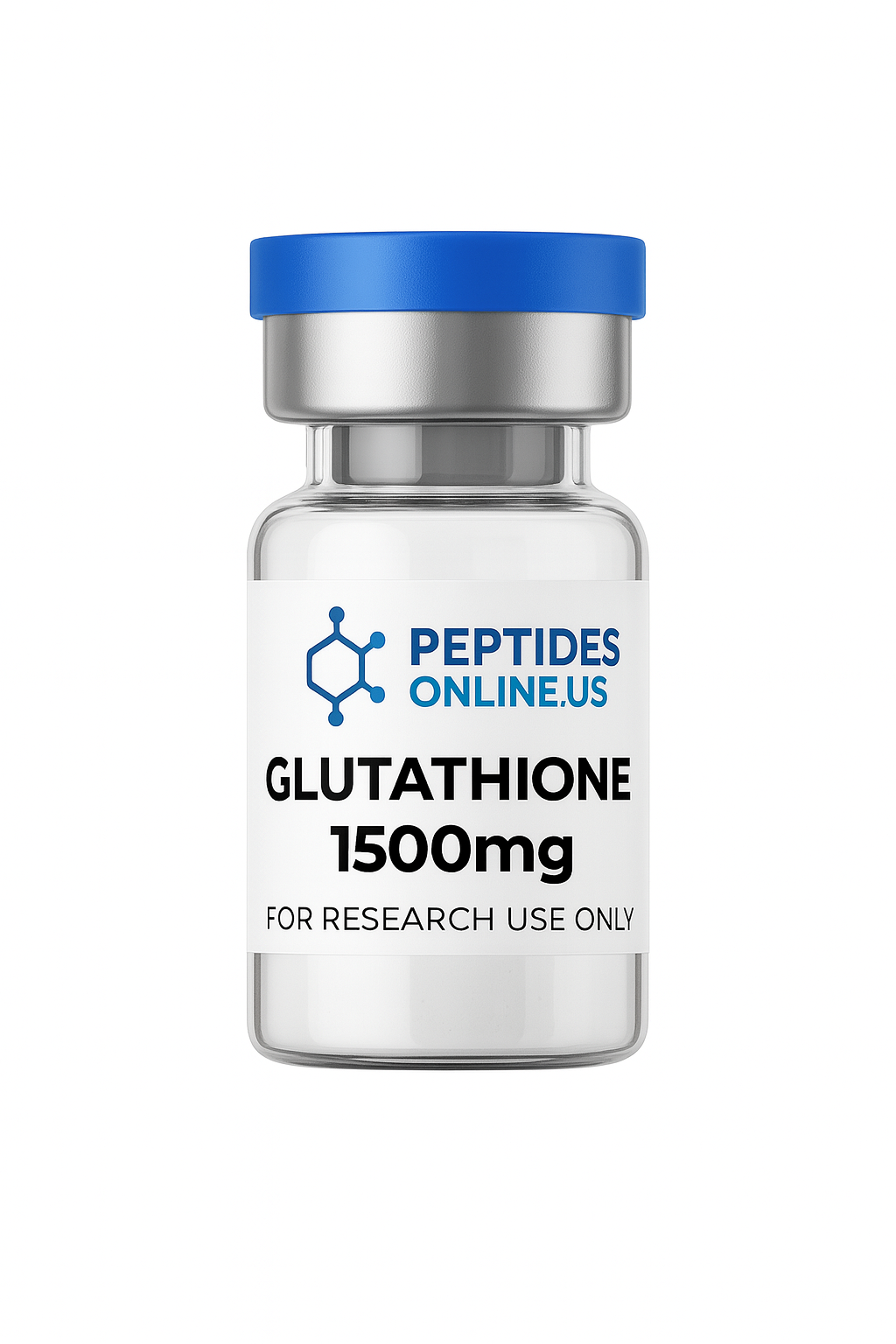
Glutathione (GHS) 500mg
Glutathione is a powerful antioxidant naturally produced in the body and found in nearly all cells. It protects cellular components by neutralizing reactive oxygen species, also known as free radicals, which can cause oxidative stress. Researchers examine the role of glutathione in cellular defense, detoxification, and redox regulation.
This tripeptide supports enzyme systems that maintain balance within cells. Understanding how glutathione functions at the molecular level provides valuable insight into how the body maintains stability and resists oxidative damage during normal biological processes.
What Is Glutathione?
What is glutathione? It is a naturally occurring tripeptide made of three amino acids—glutamine, cysteine, and glycine. [1] It was first identified in 1888 by J. de Rey-Pailhade and later studied extensively in the 20th century. Glutathione is recognized for its role in maintaining redox balance and supporting detoxification. [2]
By donating electrons to neutralize free radicals, it protects proteins, lipids, and DNA from oxidative damage. Researchers continue to study glutathione to understand its importance in cellular defense and metabolic stability.
Molecular Structure and Composition
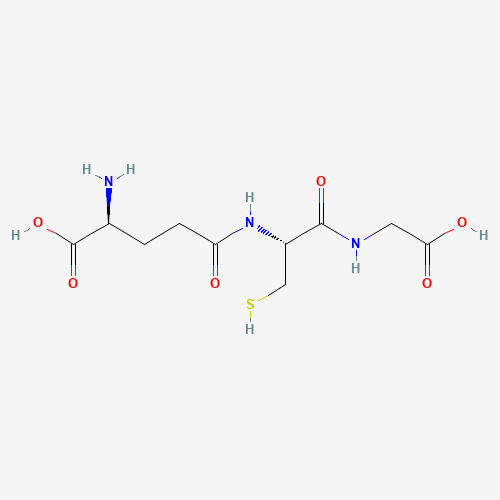
Glutathione’s molecular structure defines its unique biochemical activity. It consists of three amino acids linked by peptide bonds, forming a tripeptide with a critical sulfur-containing thiol group. This group allows glutathione to neutralize reactive oxygen species and maintain cellular redox balance.
-
Peptide Sequence: γ-L-Glutamyl-L-cysteinyl-glycine
-
Molecular Formula: C₁₀H₁₇N₃O₆S
-
Molecular Weight: 307.32 g/mol
-
CAS Number: 70-18-8
-
PubChem CID: 124886
-
Synonyms: Isethion, Tathion, Glutathione-SH, reduced glutathione, Glutinal, Tathione
These structural properties explain its key antioxidant behavior in biological systems.
Glutathione as a Cellular Antioxidant
The glutathione peptide functions as one of the body’s main cellular antioxidants. It safeguards cells by maintaining redox balance and supporting detoxification pathways that remove reactive molecules. Stable glutathione levels, maintained through ongoing glutathione synthesis, are essential for sustaining this protective activity.
-
Core Biological Functions: Glutathione regulates enzyme activity involved in detoxification and energy metabolism. It interacts with glutathione peroxidase to convert harmful peroxides into non-reactive molecules, preserving cellular health. [3]
-
Role in Oxidative Stress and DNA Repair: Under oxidative stress, glutathione helps reduce free radical buildup that may contribute to premature cell death. It also supports DNA repair enzymes, protecting genetic material from structural damage and maintaining genomic integrity. [4]
Research, Applications, and Benefits of Glutathione
Glutathione continues to draw research interest for its wide biological roles. It is examined for its connection to cellular aging, metabolic and liver health, immune system activity, and skin function. Researchers also investigate its biological effects related to neurological, eye, and joint function. Each area explores how glutathione influences oxidative stress and cellular resilience.
Anti-Aging Studies
Glutathione is often described as the body’s master antioxidant because it donates electrons and recycles vitamin C and E. This process helps lessen oxidative stress, a major focus in cellular aging studies. It maintains a balanced ratio between reduced (GSH) and oxidized (GSSG) forms to regulate redox stability. [5] Researchers studying oxidative balance often analyze how cells respond when using glutathione in varying concentrations.
In research, glutathione has been observed to influence mitochondrial stability, DNA integrity, and enzyme activity, allowing scientists to study how it influences energy production, repair mechanisms, and overall cellular longevity.
Metabolic and Liver Health
Glutathione also plays a central role in liver detoxification and is frequently examined in research exploring liver disease and cystic fibrosis. It acts as a cofactor for glutathione S-transferase (GST), an enzyme that neutralizes reactive metabolites and supports phase II detoxification. [6] In research settings, it helps convert harmful compounds into water-soluble forms for excretion.
Glutathione also protects hepatocytes from oxidative stress and maintains metabolic enzyme activity. [7] Dietary factors such as amino acid–rich foods influence how efficiently the body produces and recycles it. Studies highlight its involvement in lipid and glucose metabolism, contributing to redox balance and cellular stability within hepatic systems.
Immune System Function
Glutathione supports immune cell function by maintaining the redox environment needed for proper signaling. It helps lymphocytes, macrophages, and natural killer cells respond effectively under oxidative conditions. [8] During immune responses, glutathione neutralizes reactive oxygen species to prevent damage to surrounding tissues.
It also influences cytokine regulation, helping maintain a balanced immune response. Enzymes such as glutathione peroxidase depend on this molecule to convert peroxides into non-reactive forms, strengthening cellular defense mechanisms studied under controlled laboratory conditions.
Skin Health
Glutathione protects skin cells by neutralizing reactive oxygen species that can damage proteins, lipids, and DNA. In research, it is observed to influence melanin synthesis and skin lightening by interacting with the enzyme tyrosinase, shifting pigment balance between eumelanin and pheomelanin. [9] Future clinical trials involving people may help clarify these mechanisms.
It also recycles antioxidants like vitamins C and E, reinforcing the skin’s defense network. Studies link its antioxidant activity to maintaining collagen stability and healthy cellular turnover, helping researchers understand its impact on epidermal structure under oxidative stress.
Neurological Function
Glutathione protects neurons by neutralizing reactive oxygen species and maintaining redox stability in the central nervous system. It helps maintain mitochondrial integrity, preserving energy production and reducing oxidative stress that can affect neural signaling.
In laboratory studies, glutathione helps regulate neurotransmitter balance, influencing glutamic acid and dopamine metabolism within neural pathways. Researchers also examine its relationship to oxidative stress in Parkinson’s disease models, where dopamine regulation and redox imbalance remain central topics of study. [10]
Astrocytes supply glutathione to neurons, enhancing antioxidant defense and supporting detoxification pathways. Researchers continue examining how these interactions help sustain normal cognitive and motor functions.
Eye Health
Glutathione helps maintain lens transparency by protecting lens proteins from oxidation and cross-linking. It functions as a major reducing agent in the cornea, retina, and lens, where it neutralizes reactive oxygen species that can affect structural proteins and visual cells. [11]
Enzymes, such as glutathione peroxidase and reductase, rely on it to preserve redox balance. Ocular tissues regenerate reduced glutathione (GSH) from its oxidized form (GSSG), sustaining antioxidant defense and supporting lens clarity in high-oxygen environments studied in research.
Joint Support
Glutathione protects cartilage cells, or chondrocytes, from oxidative stress by neutralizing reactive oxygen species that can damage collagen and the extracellular matrix. It supports connective tissue stability by maintaining the structure of proteins such as collagen and elastin. [12]
Glutathione also interacts with oxidative pathways linked to inflammation in joint tissues. Studies show it helps maintain enzyme activity and energy balance in chondrocytes, supporting normal metabolic function and cellular integrity during mechanical or oxidative stress.
Potential Side Effects
In controlled studies, glutathione has shown high tolerance and biocompatibility. Researchers note that excessive exposure may alter redox balance, influencing normal oxidative-reductive signaling within cells. Some short-term studies report mild reactions such as changes in enzyme activity or temporary digestive responses.
Individual differences in metabolism, genetics, or diet can influence results. Variations in dosage, exposure time, and delivery form may also affect observed outcomes. Ongoing research continues to evaluate glutathione’s long-term safety under laboratory conditions.
Administration and Research Considerations
Researchers study several delivery methods for glutathione, including oral glutathione, intravenous, sublingual, and liposomal forms often used in supplements. Each approach affects absorption and stability differently. Bioavailability remains a central research focus, as glutathione can degrade during digestion, reducing its uptake in studies. [13]
Studies test advanced formulations and glutathione supplementation methods to improve transport across membranes. High-purity forms are preferred for consistent results and accurate redox analysis. Laboratory conditions such as pH, temperature, and light exposure influence molecular stability. Scientists use techniques like HPLC and spectrophotometry to measure concentration and verify reproducibility in research outcomes.
Product Quality and Testing
Analytical testing ensures that glutathione used in research meets strict purity and identity standards. High-Performance Liquid Chromatography (HPLC) separates glutathione from impurities, confirming its concentration and detecting product degradation. Mass Spectrometry (MS) verifies molecular structure by measuring precise molecular weight.
Together, HPLC and MS provide complementary validation of product authenticity. Reference standards and calibration materials are used to confirm analytical accuracy. Verified purity allows scientists to generate reliable data when studying enzyme kinetics, redox activity, or antioxidant mechanisms under controlled laboratory conditions.
Certificate of Analysis (COA)
A Certificate of Analysis (COA) confirms that each batch of glutathione meets defined standards for purity, identity, and composition. It includes analytical data such as purity percentage, molecular identity, solubility, and assay results verified by HPLC or MS.
COAs ensure consistency between batches, improving experimental reliability. Each certificate links the batch to documented production and testing records. Independent laboratories may verify COA data, enhancing transparency, traceability, and confidence in the research-grade quality of glutathione used in laboratory studies.
Storage and Handling Instructions
Proper storage preserves glutathione stability and prevents degradation. Heat, moisture, and light can oxidize or alter its molecular structure. Lyophilized glutathione powder should be stored in a sealed container at low temperatures, away from humidity. During reconstitution, sterile solvents and clean lab techniques maintain accuracy and prevent contamination.
Once reconstituted, refrigeration helps slow oxidation and preserve solution quality. Exposure to air may shift the GSH-to-GSSG ratio. Accurate labeling ensures traceability and consistency for ongoing laboratory research or when scientists buy glutathione for study.
Disclaimer: For Research Use Only
Glutathione is intended strictly for laboratory research purposes. It is not approved for human, veterinary, or diagnostic use. This compound should be handled only by qualified professionals in controlled environments following proper safety and compliance standards. All information provided is for scientific and educational reference. It must not be interpreted as medical, therapeutic, or legal advice. Researchers should follow institutional and regulatory guidelines when handling, storing, or studying glutathione in laboratory experiments.
Referenced Scientific Citations
-
Pizzorno, J. (2014). Glutathione! ISRN Biochemistry, 2014, 430–605. PMC
-
Aoyama, K. (2021, May 13). Glutathione in the Brain. In Encyclopedia. Encyclopedia
-
Georgiou-Siafis, S. K., & Tsiftsoglou, A. S. (2023). The key role of GSH in keeping the redox balance in mammalian cells: Mechanisms and significance of GSH in detoxification via formation of conjugates. Antioxidants, 12(11), 1953. MDPI
-
Kankaya, S., Yavuz, F., Tari, A., Aygun, A. B., Gunes, E. G., Bektan Kanat, B., Ulugerger Avci, G., Yavuzer, H., & Dincer, Y. (2023). Glutathione-related antioxidant defence, DNA damage, and DNA repair in patients suffering from post-COVID conditions. Mutagenesis, 38(4), 216–226. PubMed
-
Nuhu, F., Gordon, A., Sturmey, R., Seymour, A.-M., & Bhandari, S. (2020). Measurement of glutathione as a tool for oxidative stress studies by high performance liquid chromatography. Molecules, 25(18), 4196. PMC
-
Mazari, A. M. A., Zhang, L., Ye, Z.-W., Zhang, J., Tew, K. D., & Townsend, D. M. (2023). The multifaceted role of glutathione S-transferases in human cells. Biomolecules, 13(4), 688. PMC
-
de Andrade, K. Q., Moura, F. A., dos Santos, J. M., de Araújo, O. R. P., de Farias Santos, J. C., & Goulart, M. O. F. (2015). Oxidative stress and inflammation in hepatic diseases. Oxidative Medicine and Cellular Longevity, 2015, 891734. PMC
-
Abnousian, A., Vasquez, J., Sasaninia, K., Kelley, M., & Venketaraman, V. (2023). Glutathione modulates efficacious changes in the immune response. Antioxidants, 12(11), 2123. PMC
-
Lu, Y., Tonissen, K. F., & Di Trapani, G. (2021). Modulating skin colour: Role of the thioredoxin and glutathione systems in regulating melanogenesis. Bioscience Reports, 41(5), BSR20210427. PMC
-
Smeyne, M., & Smeyne, R. J. (2013). Glutathione metabolism and Parkinson’s disease. Neurobiology of Disease, 62, 272–279. PMC
-
Chen, Y., Mehta, G., & Vasiliou, V. (2009). Antioxidant defenses in the ocular surface. The Ocular Surface, 7(4), 176–185. PMC
-
Shan, Z., Tan, D., Satriano, J., Silbiger, S., & Schlondorff, D. (1994). Intracellular glutathione influences collagen generation by mesangial cells. Kidney International, 46(2), 388–395. PubMed
-
Santacroce, G., Gentile, I., Soriano, G., Novelli, F., Lenti, L., & Di Sabatino, A. (2023). Glutathione: Pharmacological aspects and implications for clinical use. Frontiers in Medicine, 10, 1124275. PMC