


FOXO4-DRI (10mg) – Proxofim
FOXO4-DRI, also known as Proxofim, is a synthetic D-retro-inverso peptide designed to interrupt the interaction between FOXO4 and p53 proteins. By doing so, it enables researchers to study the programmed death of aged or senescent cells. This compound gained attention after early studies suggested its potential to help clear these non-dividing “zombie” cells that contribute to biological decline in research models.
As a 10 mg lyophilized peptide, FOXO4-DRI is valued for its purity, precision, and consistent laboratory performance. Researchers use it to explore cellular aging mechanisms and protein-protein signaling dynamics. This guide provides detailed information on FOXO4-DRI, covering its molecular structure, functional behavior, and significance in scientific research.
Overview of FOXO4-DRI
FOXO4-DRI was first developed by researchers studying the molecular basis of aging and cell cycle regulation. The peptide was engineered to interrupt the FOXO4–p53 protein interaction, which plays a key role in maintaining senescent cells. [1] This disruption allows scientists to study apoptosis-related processes, cellular turnover, and tissue homeostasis in controlled environments.
When you ask, "What is FOXO4-DRI?" you’re referring to a D-retro-inverso peptide with a reversed amino acid sequence designed for molecular stability in research settings. It is widely used in studies focused on cellular senescence, DNA integrity, and protein signaling pathways. Each 10 mg batch is synthesized to research-grade purity and includes a Certificate of Analysis (COA). Proper handling and cold storage maintain FOXO4-DRI’s structural stability and experimental reliability.
Discovery and Development of Proxofim Peptide
The FOXO4-DRI peptide was developed by Dr. Peter de Keizer and his team at Erasmus University Medical Center. [2] Their goal was to design a compound that could study how senescent cells resist natural cell death. They created a D-retro-inverso version of the FOXO4 fragment to improve stability and resistance to enzymatic degradation.
Early animal research showed FOXO4-DRI’s ability to target senescent cells selectively, including studies exploring its role in targeting senescent leydig cells. The peptide, later named Proxofim, was noted for its precise molecular selectivity in early reports.
Over time, additional studies continued to investigate its role in aging and cellular signaling. This marked a milestone in peptide science and opening new avenues for controlled exploration of cellular senescence.
Understanding “DRI” Retro-Inverso Peptides
The “DRI” in FOXO4-DRI stands for D-retro-inverso, a structural configuration that reverses the amino acid sequence while using D-amino acids instead of the natural L-forms. This design mirrors the original peptide’s shape but inverts its orientation, creating a molecule that is more stable and resistant to enzymatic degradation.
Retro-inverso peptides, including FOXO4-DRI, are used to investigate protein-protein interactions, cellular signaling, and peptide longevity in biological systems. [3] Researchers use retro-inverso peptides to study molecular mechanisms without rapid breakdown and also apply cell signaling technology to map related pathways.
Other examples of retro-inverso peptides include analogs used in signal transduction and receptor-binding experiments. Analytical techniques like HPLC and mass spectrometry confirm the reversed sequence and D-amino acid composition, ensuring precision in synthesis and consistency across research applications.
Why Retro-Inverso Design Improves Peptide Stability
The retro-inverso design of FOXO4-DRI peptides reverses the peptide sequence and replaces natural L-amino acids with D-amino acids. This modification makes the structure less recognizable to proteolytic enzymes that typically degrade peptides. As a result, the molecule remains stable for longer periods during experiments.
This design also extends FOXO4-DRI’s half-life and preserves its three-dimensional structure under varied research conditions. Studies show that retro-inverso peptides can retain intended binding properties while demonstrating greater molecular resilience.
Researchers value this stability because it supports consistent data collection and reproducibility in long-term laboratory work. By maintaining functional integrity, FOXO4-DRI supports consistent readouts across in vitro and ex vivo studies when handled per protocol.
FOXO4-DRI Molecular Structure and Composition
FOXO4-DRI’s molecular structure reflects a carefully engineered peptide sequence designed for high stability and selectivity. Its D-retro-inverso configuration allows it to mimic the biological activity of the native FOXO4 peptide while resisting enzymatic degradation. The molecule’s orientation supports targeted binding in cellular environments where FOXO4 and p53 interactions occur.
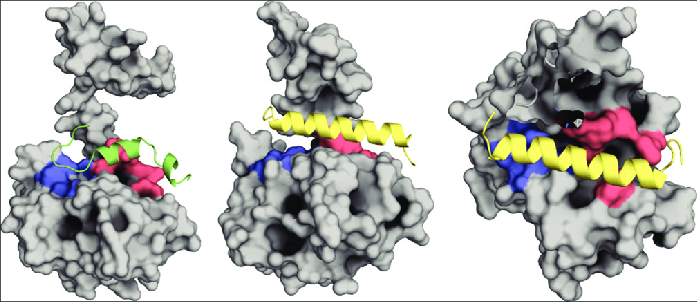
This peptide is supplied in lyophilized form and meets strict research-grade purity standards. Each batch undergoes analytical verification to confirm sequence accuracy and consistency. These features make FOXO4-DRI a commonly used option among laboratories studying peptide-based protein interactions and cellular senescence mechanisms.
Peptide Sequence and Formula
The FOXO4-DRI peptide is a D-retro-inverso (DRI) analog of a native FOXO4 fragment, meaning it has a reversed amino acid orientation composed of D-amino acids. This configuration is designed to mimic the original peptide’s structure while increasing resistance to enzymatic degradation in research settings.
This peptide has been described in research databases with a molecular formula of C₂₂₈H₃₈₈N₈₆O₆₄ and an approximate molecular weight of 5,358.06 g/mol, based on vendor and analytical data from established peptide suppliers. These specifications support its use as a reference material for structural and stability studies.
During synthesis, laboratories use High-Performance Liquid Chromatography (HPLC) and Mass Spectrometry (MS) to confirm purity and verify the correct sequence. This process ensures each FOXO4-DRI sample aligns with strict quality standards. Understanding its sequence and formula helps you reproduce consistent results in studies focused on FOXO4 and p53 protein interactions, senescence signaling, and targeted molecular behavior.
Structural Modifications for Cellular Selectivity
FOXO4-DRI’s structure was modified to allow selective interaction with senescent cells while minimizing effects on healthy, dividing cells. The FOXO4-binding domain directs the peptide to specific intracellular targets that regulate cell cycle arrest and aging responses. By altering its amino acid sequence and using D-amino acids, the peptide supports cellular uptake and stability.
Studies show that FOXO4-DRI disrupts the FOXO4–p53 complex, including in senescent fibroblasts, which researchers use to analyze apoptosis-related pathways under laboratory conditions. [4] These targeted modifications enhance the peptide’s research value by allowing precise modeling of selective senolytic behavior. Through this design, scientists can better study cellular longevity, apoptosis mechanisms, and molecular interactions.
Lyophilized Form and Research-Grade Purity
FOXO4-DRI is supplied as a lyophilized powder to maintain molecular integrity and extend storage life. Lyophilization removes moisture under vacuum, leaving a stable, dry peptide that can be easily reconstituted before research use. This form protects the peptide from degradation during shipment and long-term storage.
Each batch of FOXO4-DRI achieves a purity level of ≥98%, verified through High-Performance Liquid Chromatography (HPLC) and Mass Spectrometry (MS). [5] Research-grade purity ensures reproducible results and minimizes experimental variability.
The sterile, sealed packaging prevents contamination, preserving sample consistency. For reconstitution, use sterile water or buffer solutions. Proper handling keeps FOXO4-DRI stable and dependable for precise laboratory investigations in cellular and molecular peptide research.
FOXO4-DRI and Cellular Senescence Research
FOXO4-DRI plays a central role in cellular senescence research by helping scientists understand how aged cells accumulate and affect biological systems. The peptide is studied for its interaction with the FOXO4–p53 signaling pathway, a key regulator of programmed cell death in damaged cells.
Researchers use FOXO4-DRI to examine mechanisms that control cell aging and survival. This includes tests in human leydig cells under in vitro conditions and models that simulate elderly testicular leydig cells. Its selective action on senescent cells allows accurate modeling of age-related cellular behavior and cell viability outcomes.
This compound also supports studies on apoptosis, tissue maintenance, and molecular signaling, offering a reliable framework for exploring the biological processes that underlie aging and cellular decline.
Mechanism of Action in Cell Senescence and Aging Studies
FOXO4-DRI interacts directly with the FOXO4 and p53 proteins, two key regulators of cellular aging and survival. In senescent cells, FOXO4 binds to p53, preventing it from triggering programmed cell death. FOXO4-DRI disrupts this interaction. It allows p53 to initiate apoptosis, eliminating senescent cells.
This mechanism helps researchers study how cells respond to stress, DNA damage, and prolonged replication arrest, as well as changes linked to the senescence-associated secretory phenotype. Early cell culture and animal studies have shown that FOXO4-DRI promotes the removal of dysfunctional cells in specific models while preserving normal cells. It is now used as a research tool to explore aging, tissue recovery, and longevity-related molecular pathways without implying therapeutic applications.
Role in Clearing Senescent Cells (Senolytic Potential)
FOXO4-DRI targets senescent cells by interfering with the FOXO4–p53 pathway that prevents these aged cells from undergoing programmed death. Senescent cells are damaged or non-dividing cells that accumulate over time and contribute to biological decline in research models. By disrupting the protective FOXO4–p53 bond, FOXO4-DRI allows p53 to initiate apoptosis in these cells in model systems.
Laboratory findings report selective effects on senescent cells with limited impact on normal cells in certain models. In research models, eliminating senescent cells attenuates signals linked to disrupted normal tissue function. This selectivity makes it a valuable tool for studying senolytic mechanisms and cellular aging. Experimental results from animal and cell culture models have reported tissue-level changes associated with senescent-cell modulation, subject to model and methods. This continues to guide scientific exploration into molecular pathways linked to age-related cellular processes.
FOXO4 and p53 Pathway Interaction
FOXO4 and p53 are essential proteins that regulate cell survival, DNA repair, and aging responses. In senescent cells, FOXO4 binds tightly to p53, preventing it from activating programmed cell death. [6] This interaction is associated with the persistence of damaged cells, which can influence cellular balance in tissues over time.
FOXO4-DRI disrupts the FOXO4–p53 complex, freeing p53 to resume its normal apoptotic function. This action allows researchers to study how cells remove dysfunctional components in controlled settings, including assays with dysfunctional senescent leydig cells. In these assays, they use primary antibodies against FOXO4 and p53 to track nuclear and cytoplasmic protein signals.
The discovery of this pathway revealed a key target for understanding cellular senescence. FOXO4-DRI now serves as a model compound for investigating protein-protein interactions and molecular responses linked to aging and stress management.
Key Areas of FOXO4-DRI Research
FOXO4-DRI is widely used to study biological pathways linked to aging, metabolism, and cellular repair. Researchers explore its influence on insulin signaling, heart and vascular function, and neurodegenerative processes. The peptide’s ability to target senescent cells makes it useful for understanding tissue recovery and regeneration, including testis-focused studies that assess leydig cell stem cells and regulating leydig cell senescence.
Studies also focus on FOXO4-DRI’s role in oxidative stress response and energy regulation. Its applications extend to metabolic, cardiovascular, and neurological research. These investigations help clarify how cellular aging affects multiple systems and how FOXO4-DRI supports the exploration of advanced peptide mechanisms.
Metabolic and Insulin Pathway Studies
FOXO proteins, including FOXO4, play a major role in regulating glucose metabolism, insulin sensitivity, and decreased testosterone synthesis observed in aging-related research. [7] Researchers use FOXO4-DRI to examine how this peptide influences insulin signaling and cellular energy balance in laboratory models. By studying FOXO4-DRI’s activity, scientists gain insight into how cellular senescence affects metabolic health and energy production.
Experimental work connects FOXO4-DRI research to investigations on oxidative stress and mitochondrial function. In several models, FOXO4-DRI has been reported to influence pathways involved in insulin resistance and glucose regulation in model systems. These findings help researchers understand how aging impacts metabolic control. FOXO4-DRI continues to serve as a valuable research tool for analyzing age-related metabolic decline and its molecular underpinnings.
Heart and Vascular Function Research
Researchers study FOXO4-DRI to better understand how senescent cells affect vascular health and heart tissue function. The buildup of aged cells within blood vessels contributes to reduced elasticity and oxidative damage, both common topics in cardiovascular aging studies. FOXO4-DRI helps scientists explore these mechanisms by selectively targeting senescent cell pathways.
Laboratory research has investigated FOXO4-DRI’s influence on endothelial cell activity and vascular regeneration. Findings suggest that its disruption of FOXO4–p53 signaling may clarify cell survival and repair processes in vascular models. Studies also examine its role in tissue recovery following stress or damage. Through this work, FOXO4-DRI provides a useful model for studying peptide-based research approaches in cardiovascular biology.
Neurodegenerative Disease Models
FOXO4-DRI is frequently studied in models of neurodegenerative conditions to understand how senescent cells influence brain function. [8] Researchers examine its effect on neuronal environments, focusing on the FOXO4–p53 pathway that regulates cell survival and stress responses. This peptide helps scientists investigate how aging impacts neurons and supporting glial cells.
In laboratory settings, FOXO4-DRI has been studied for effects on the buildup of senescent cells in brain tissues. Some reports note model-dependent changes in neuronal readouts under controlled conditions. Studies link its activity to improved neuronal function and reduced oxidative stress in controlled experiments. Researchers also analyze how FOXO4-DRI affects mitochondrial balance and synaptic signaling. These studies expand understanding of peptide behavior in age-related cognitive decline and neurobiological health.
Anti-Aging and Regenerative Biology Applications
Researchers use FOXO4-DRI to study how removing senescent cells may support tissue repair and rejuvenation. By targeting the FOXO4–p53 pathway, this peptide helps investigate the biological processes that regulate cellular renewal and age-related decline. In laboratory studies, FOXO4-DRI is applied to explore how clearing damaged cells influences regeneration across various tissue types.
Experiments in animal and cell culture models have reported model-specific changes in tissue function and structure. Its selective senolytic behavior provides a reliable framework for studying longevity and regenerative mechanisms. Scientists continue to analyze FOXO4-DRI’s molecular effects to gain insight into how aging impacts cellular recovery, renewal, and overall biological performance in research environments.
Summary of Research Findings
Research on FOXO4-DRI consistently highlights its selective activity toward senescent cells in laboratory models. Studies show that it exhibits selective activity toward senescent cells in laboratory models, with limited effects on normal cell populations reported in certain studies. This precision has made FOXO4-DRI an important reference in aging and longevity research.
Experiments conducted in cell cultures and animal studies reveal improvements in tissue recovery and biological markers associated with aging. FOXO4-DRI also provides insight into protein signaling and apoptosis mechanisms related to cellular health. While findings remain preclinical, the data emphasize FOXO4-DRI’s reliability as a model peptide for studying senescence. Ongoing research continues to define its potential roles and limitations in molecular and peptide-based investigations.
Analytical Verification and Quality Control
Each batch of FOXO4-DRI undergoes strict analytical verification to confirm purity, structure, and identity. Quality control testing ensures that researchers receive a product consistent with laboratory-grade standards. Every synthesis includes a Certificate of Analysis (COA) showing purity data, molecular weight confirmation, and testing results.
These reports confirm compliance with research specifications and support experimental accuracy. Laboratories rely on these records when they buy FOXO4-DRI from verified suppliers such as Peptides Online. Reliable testing and documentation maintain product transparency and build confidence among researchers who depend on consistent, high-quality peptide materials for reproducible studies.
Certificate of Analysis (COA)
A Certificate of Analysis, or COA, verifies the quality and authenticity of each FOXO4-DRI batch. This document includes essential data such as purity percentage, molecular weight, sequence confirmation, and results from analytical testing. Laboratories use it to confirm that the peptide meets established research-grade standards before use.
COAs are produced through advanced analytical methods like High-Performance Liquid Chromatography (HPLC) and Mass Spectrometry (MS). Each batch of FOXO4-DRI is independently tested to ensure consistency, identity, and compliance. Researchers can review the COA to validate specifications before experimental work begins. Peptides Online provides COAs for all peptide products, supporting transparency, reproducibility, and confidence in every FOXO4-DRI purchase for laboratory research.
Purity and Identity Testing
Purity testing ensures that FOXO4-DRI meets the highest research-grade standards before reaching laboratories. Each batch is analyzed using High-Performance Liquid Chromatography (HPLC) to measure purity levels, which typically exceed 98%. Mass Spectrometry (MS) verifies molecular weight and confirms that the peptide’s composition matches the intended FOXO4-DRI sequence.
Identity testing validates the exact amino acid sequence and ensures the absence of synthesis errors or contaminants. Impurities and by-products are identified and removed during quality control. These processes guarantee reproducibility across experiments. Peptides Online applies these verification steps to maintain transparency and reliability. Each FOXO4-DRI batch undergoes full analytical evaluation before COA approval, ensuring accurate, consistent, and dependable results in laboratory research.
Product Form, Storage, and Stability
FOXO4-DRI is supplied as a lyophilized powder to protect its structure and extend its shelf life. The freeze-drying process preserves molecular stability, preventing degradation during transport and long-term storage. This form allows accurate reconstitution for laboratory research.
Store unopened vials at –20°C in a dark, dry environment to maintain peptide integrity. Once reconstituted, FOXO4-DRI should be kept at 2–8°C and used within a short period for best results. Avoid repeated freeze-thaw cycles, as they may affect stability. Proper handling ensures the peptide maintains its molecular behavior and purity throughout experiments. Only trained professionals should prepare and manage FOXO4-DRI under standard laboratory safety and compliance procedures.
Disclaimer
FOXO4-DRI Peptide (10mg) is intended strictly for laboratory research purposes. It is not approved for human, veterinary, or diagnostic use. This peptide must be handled only by qualified professionals working in controlled research environments. Proper storage and safety protocols should always be followed to maintain product integrity. All information provided is for scientific and educational reference only. It should not be taken as medical, therapeutic, or legal advice. These details are presented to ensure transparency and responsible research use of FOXO4-DRI Peptide (10mg) in compliance with established laboratory and regulatory standards.
References and Citations
-
Tripathi, U., Gogna, R., Kale, V. P., Offord, R. E., & Bach, D. (2021). Development of a novel senolytic by precise disruption of the FOXO4–p53 complex using FOXO4-blocking peptides, releasing p53 and inducing apoptosis in senescent cells. Aging and Mechanisms of Disease, 7(1), 7. PMC
-
Kirkland, J. L., & Tchkonia, T. (2017). Molecule kills elderly cells, reduces signs of aging in mice. Science, 355(6330), 121–122. Science.org
-
Tripathi, U., Římorová, J., Mustachio, L. M., Díaz, B. C., Richter, H., Hansen, A., … & Turner, C. (2021). Development of a novel senolytic by precise disruption of the FOXO4–TP53 interaction to design senolytic peptides for the elimination of senescent cancer cells. eBioMedicine, 69, 103467. The Lancet
-
Martínez-Fernández, J., Silva-Santisteban, M. K., & Jiménez-Ruiz, A. (2017). A FOXO4-inhibitory peptide limits chemotoxicity in mice. Cancer Discovery, 7(6), OF21. AACRJournals
-
Huang, Y., He, Y., Makarcyzk, M. J., & Lin, H. (2021). Senolytic peptide FOXO4-DRI selectively removes senescent cells from in vitro expanded human chondrocytes. Frontiers in Bioengineering and Biotechnology, 9, 677576. FrontiersIn
-
Bourgeois, B., & Madl, T. (2018). Regulation of cellular senescence via the FOXO4-p53 axis. FEBS Letters, 592(12), 2083–2097. PMC
-
Gross, D. N., Wan, M., & Birnbaum, M. J. (2009). The role of FOXO in the regulation of metabolism. Current Diabetes Reports, 9(3), 208–214. Springer
-
Baar, M. P., Brandt, R. M. C., Putavet, D. A., Klein, J. D. D., Derks, K. W. J., Bourgeois, B. R. M., … de Keizer, P. L. J. (2017). Targeted apoptosis of senescent cells restores tissue homeostasis in response to chemotoxicity and aging. Cell, 169(1), 132–147.e16. PMC